TL;DR: Medivere is a German laboratory provider based in Mainz, offering specialized diagnostic self-tests — blood, saliva, and stool are analyzed through the DAkkS-accredited partner lab GANZIMMUN Diagnostics. Lab2go is a tracking platform that imports lab results from any source via OCR and visualizes them over years. Medivere solves the analysis problem; Lab2go solves the history problem — and for many biohackers they complement each other more than they compete.
Anyone who wants to measure their health systematically quickly hits a fork in the road: do I need a specific test right now — or do I need a structure that lets me meaningfully evaluate the tests I already have? Medivere and Lab2go represent those two answers. This comparison explains what each delivers, where the key differences lie, and when a combination makes more sense than picking one over the other.
Quick Comparison at a Glance
| Dimension | medivere | Lab2go |
|---|---|---|
| Core offering | Self-tests (blood, saliva, stool) + GANZIMMUN lab analysis + results report | Biomarker and supplement tracking, OCR import, long-term dashboard |
| Pricing model | Per test, one-time (approx. €21–€252+) | Subscription: Free or Pro (€7.99 per month, €49.99 per year) |
| Panel focus | Hormones (saliva), vital substances, gut microbiome, heavy metals, thyroid | Any lab value can be logged (Free and Pro: unlimited biomarkers) |
| In-house lab | No in-house lab — analysis via GANZIMMUN Diagnostics GmbH (Mainz, DAkkS-accredited) | No in-house lab — aggregates external results |
| Tracking focus | Individual results per test order, no cross-source long-term dashboard | Long-term history across all sources, supplement stack integrated |
| OCR import of external results | No | Yes (PDF, JPG, PNG up to 20 MB) |
| Sample types | Capillary blood, saliva, stool, urine | Not applicable — accepts results from any source |
| Languages | Primarily German | Website: German, English, French, Spanish, Italian; web app: German, English |
| App / dashboard | Online portal for orders and result retrieval | Web app, iOS beta (TestFlight) |
| Family / multi-user | Per ordering account | 1 profile (Free), unlimited (Pro) |
| GDPR / hosting | GDPR-compliant, lab in Germany (Mainz) | Database in Frankfurt (EU), stored encrypted; report analysis also via a provider in France (Mistral AI) |
| Supplement tracking | No supplement management | Supplement stack with dose, timing, start/stop dates |
Provider prices as of April 2026, Lab2go prices as of September 2026; all prices per provider website and price comparison portals. These are snapshots — check current pricing and feature scope before purchasing.
What medivere Does Especially Well
Medivere is a self-test provider based in Mainz, specializing in naturopathic and functional medicine diagnostics. Its core strength is the partnership with GANZIMMUN Diagnostics GmbH — one of Germany’s most respected labs for preventive and complementary medicine diagnostics, founded in 1998 in Mainz, DAkkS-accredited, with over 4,000 parameters in its test catalog.
What sets medivere apart from providers focused on conventional medicine is its diagnostic emphasis. Many test providers concentrate on the standard blood markers a GP would also measure. Medivere goes further into functional and naturopathic territory.
Saliva testing for hormone status and cortisol profiles. Medivere offers hormone panels via saliva — for women (estradiol, estriol, progesterone, testosterone, DHEA, cortisol) and as cortisol day profiles (upon waking, after 2 hours, after 4 hours). Saliva tests measure the free hormone fractions; they are used for questions around stress response and perimenopause and are rarely offered by a conventional GP.
Gut diagnostics. Medivere’s gut health check and the Darm-Mikrobiom Plus stool test analyze flora status, aerobic and anaerobic marker organisms, fungi, yeasts, digestive residues, and zonulin — an inflammation marker for gut permeability. This is significantly broader than what a standard gastroenterology stool test covers. The leaky gut guide describes which markers are looked at for gut questions; whether a test is appropriate is clarified by a doctor.
Vital substances and micronutrients. Vitamin status (B12, D, folate), mineral profiles, heavy metal burden, and vitamin check bundles — the range covers functional medicine questions that a standard NHS or insurance-covered blood panel doesn’t answer. A useful complement to the micronutrient deficiency patterns described in the Lab2go blog.
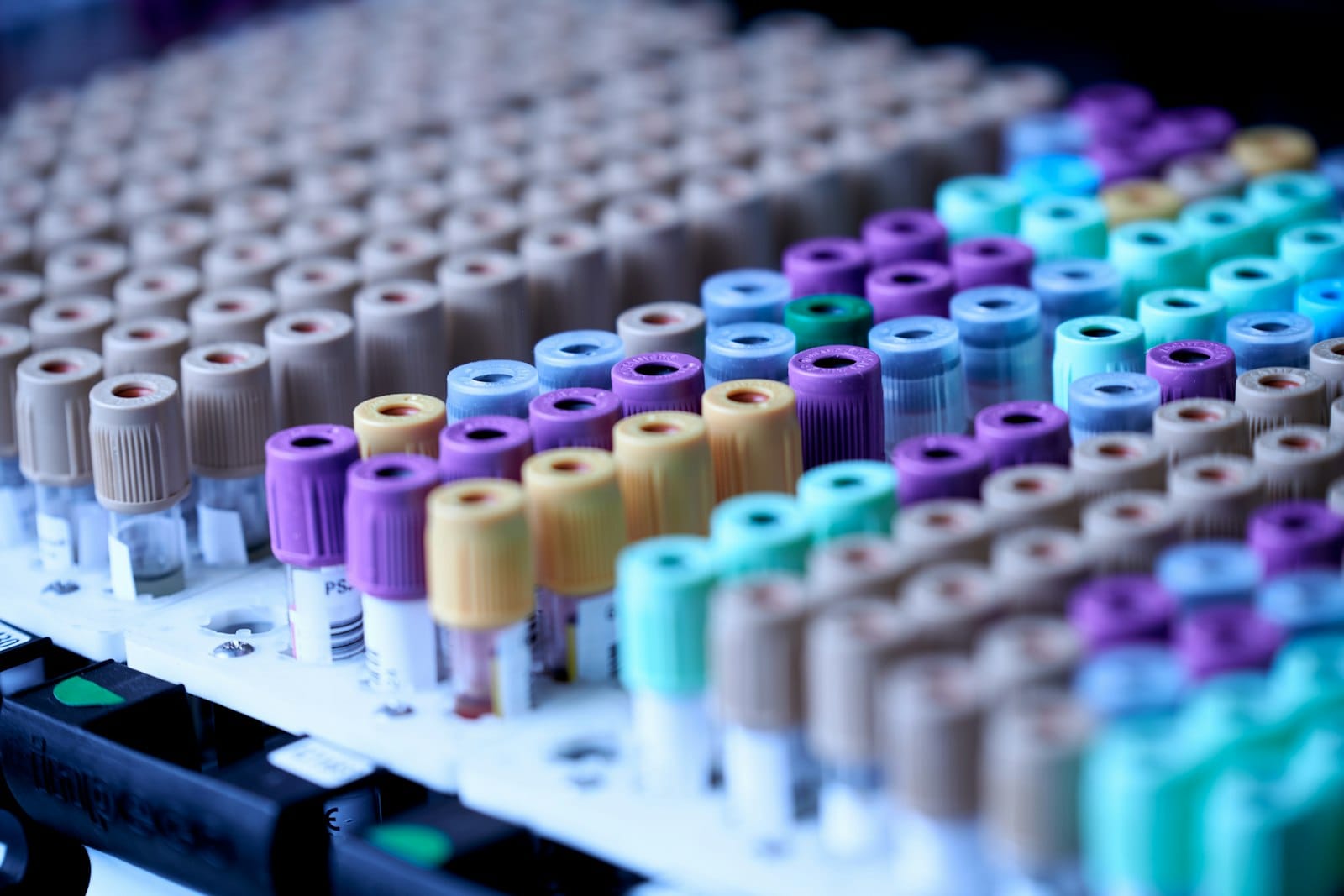
A low entry threshold. A Vitamin D blood test from around €21 makes certain individual tests genuinely affordable. Orders require no prescription; the sample collection kit ships to your home; results arrive within 5–14 working days as a results report, depending on the test and current sample volume.
What Lab2go Does Especially Well
Lab2go is not a testing brand — it’s a tracking platform. It doesn’t analyze blood, saliva, or stool itself; it accepts your lab results from any source and turns them into a searchable, comparable, exportable long-term history.
OCR import for external results. Upload a medivere results report, a GP blood panel, or a photo of a printed lab sheet — the OCR engine reads the values automatically and places them in the correct biomarker category. This is the core capability that most tools lack: aggregating what you already have. More on the mechanics in the PDF lab report import guide.
Long-term time series across all sources. A ferritin value from your GP’s panel in 2023, a medivere hormone status from last autumn, and a private lab result from today — all three land in the same time series with trend arrows and color-coded reference ranges. If your DHEA has been declining over several data points, you see it immediately, even if the tests came from different providers. This is the core of the long-term biomarker tracking approach.
Supplement stack right alongside the biomarkers. Every supplement in Lab2go is logged with dose, timing, cycle, and start date. Define a target biomarker for yourself and compare it against your lab history. Individual test results become part of a structured N=1 experiment. The supplement stack management guide covers this in detail.
Family profiles and multilingual support. Family profiles on the Pro plan; the website is available in five languages, and the web app runs in German and English (the iOS beta is largely translated into all five). Anyone tracking for a partner or family sets up separate profiles. More on this in the Lab2go for couples health tracking article.
A real free tier with no time limit. Lab2go Free allows unlimited biomarkers in one profile and your full history — permanently free. Pro (€7.99 per month or €49.99 per year) adds unlimited profiles. Full details on the pricing page and in the feature overview.
The Key Differences
The difference between medivere and Lab2go is not one of degree — it’s categorical. They are two different product types answering different questions.
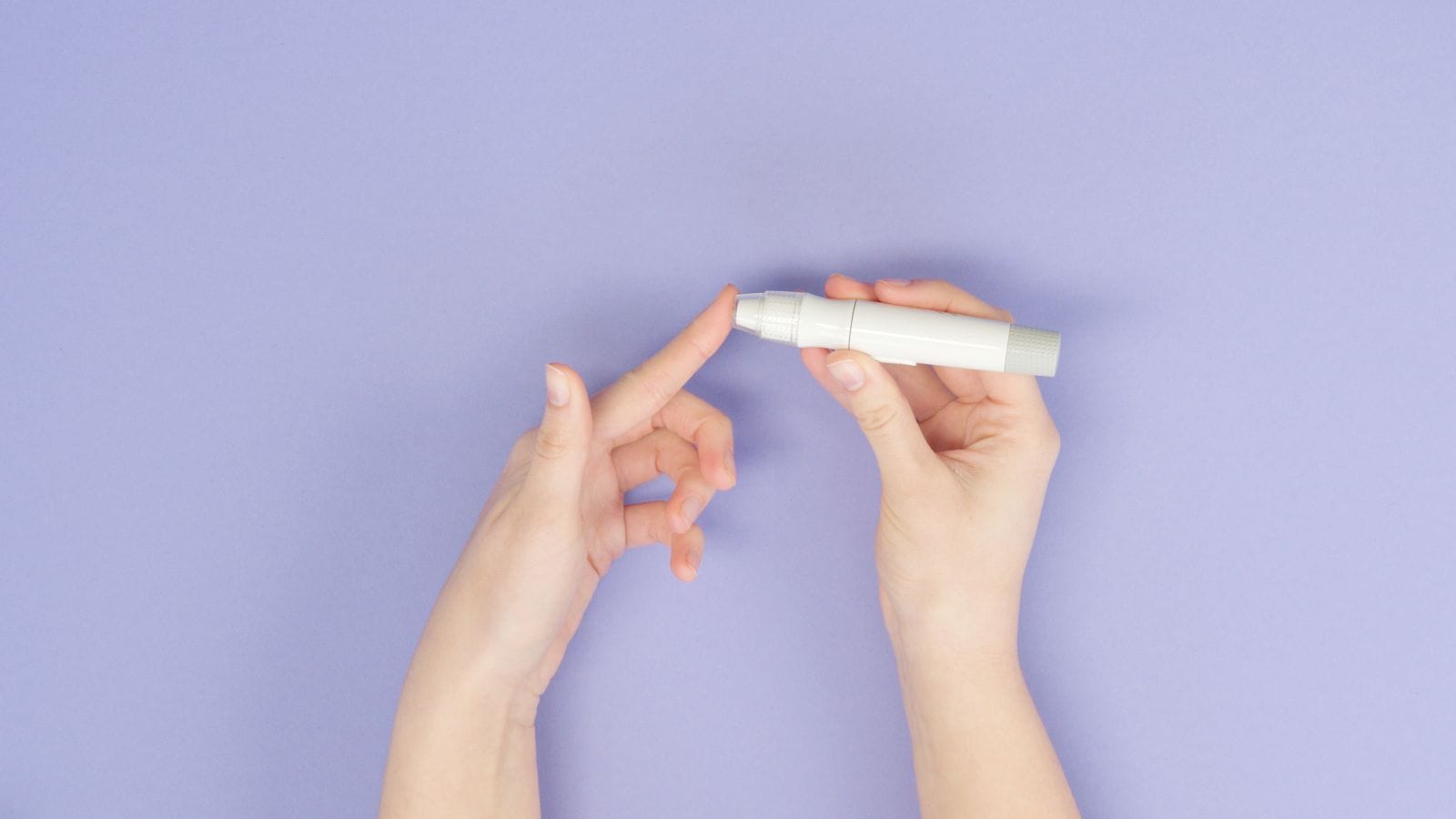
Testing method and sample types. Medivere ships you a kit — capillary blood via fingerstick, saliva, stool, or urine depending on the test. The sample goes to GANZIMMUN; you get a results report back. Lab2go provides no kit and analyzes nothing. It’s the data destination where medivere reports, GP PDFs, and private lab results all converge.
Diagnostic focus. Medivere’s emphasis is naturopathic-functional medicine: saliva hormone profiles, gut microbiome, vital substance status, heavy metals. This is a different spectrum from conventional medicine standard labs. Lab2go is content-neutral — it takes in whatever you put in, whether it’s a standard blood panel or a naturopathic saliva test.
Cost structure. Medivere is paid per test. A Vitamin D blood test around €21, a hormone profile €57–105, a comprehensive gut microbiome package over €200 — one-time, including lab analysis. Lab2go is a subscription: €0 or €49.99 per year, regardless of how many values are entered. The costs are independent of each other — medivere tests cost money regardless of which Lab2go plan you have.
Tracking depth. Medivere delivers individual results with reference range interpretation per test order. A cross-source long-term dashboard integrating different test types (blood, saliva, stool) from different years is not the primary use case. Lab2go is built exactly for that: all values in one time series, regardless of origin.
Intervention integration. Supplement dose alongside a biomarker time series is Lab2go territory. Medivere includes notes in the results report but doesn’t track intake as a structured stack.
Languages and international use. Lab2go runs in five languages; medivere addresses primarily the German-speaking market. For international households, this is a clear advantage for Lab2go.
Three Realistic Pricing Scenarios
Three typical user profiles with rough estimated annual totals (purely illustrative calculation, not a recommendation on testing frequency; provider prices as of April 2026, Lab2go prices as of September 2026, excluding insurance reimbursements):
Scenario 1 — Targeted single measurement. One Vitamin D test in autumn (approx. €21) plus one female hormone profile in spring (approx. €57–105). Medivere total: approx. €80–130. Lab2go Free for PDF storage is enough. Total: approx. €80–130 per year.
Scenario 2 — Functional medicine biohacker. Two medivere panels per year (e.g., cortisol day profile approx. €90, gut health check approx. €150), plus three GP blood panels (likely covered by insurance). Lab2go Pro (€49.99/year) for OCR import and supplement tracking. Total: approx. €290–330 per year.
Scenario 3 — Family with multiple tracking goals. Medivere tests for two family members (approx. €300–400 combined). Lab2go Pro (€49.99/year) for all profiles with a shared overview. Total: approx. €350–450 per year.
The key insight: medivere costs scale with the number and complexity of tests; Lab2go costs scale with the tracking feature level. Both budgets run independently — wanting to test more costs more for tests, regardless of the Lab2go plan.
When Does medivere Fit Better?
Medivere is aimed at people with specific diagnostic questions that neither a GP nor public health insurance covers as standard — and who want a results report rather than a raw data table.
Typical reasons people turn to such self-tests: a cortisol day curve for stress questions, a hormone profile in a perimenopausal context, a microbiome analysis that goes beyond the standard, or questions about heavy metal burden and vital substance status that a routine blood panel doesn’t detect. Saliva tests measure free hormone fractions that serum tests don’t resolve at this level of detail. Whether such a test makes sense in an individual case is clarified by a doctor.
Also a good fit: If you work with a naturopathic or functional medicine practitioner who incorporates GANZIMMUN reports into their assessment — the lab’s results reports are designed for this context.
When Does Lab2go Fit Better?
Lab2go is aimed at people who already collect lab values from various sources or want to document them over the long term — and need a structure that works independently of the test provider.
Typical scenarios: GP blood panels from the past few years, a few medivere results reports and maybe a cerascreen test should be viewed in one place. Anyone documenting supplement intake and comparing it with biomarkers finds the systematic approach in the biomarker baseline checklist and the N=1 experiment playbook. Tracking for a partner or family with separate profiles and a data export that survives provider changes belong here too.
Also a good fit: When the number of your lab results has reached a critical mass where one app per provider no longer makes sense — and you want to keep interpretive control over your own data rather than delegating it.
Better Together? The Combination Strategy
The most honest answer: for biohackers with a naturopathic focus, medivere and Lab2go are not alternatives — they complement each other: the lab provides the measurements, Lab2go documents and visualizes them.
The flow in practice: You order a saliva hormone profile or a gut microbiome analysis from medivere — areas where GANZIMMUN’s analytical depth genuinely adds value over standard blood panels. You collect the sample at home, mail it in, and receive the results report as a PDF. That PDF then goes into Lab2go via OCR upload. There, the medivere hormone result sits alongside your most recent GP blood panel, your Vitamin D result from last autumn, and the supplement stack you’re currently running.
The result: you use medivere’s diagnostic depth for the questions that standard medicine labs don’t answer, and Lab2go’s tracking infrastructure for the long-term perspective. No data fragmentation, no results reports scattered across app silos.
For the PDF import mechanics in Lab2go, the lab archive automation guide is worth reading — it shows how medivere results can be systematically moved into a long-term archive.
Data Export and Long-Term Planning
An often underestimated aspect: what happens to your data if you switch providers?
Medivere makes results reports available as PDFs that you can download. A structured CSV export of all values ever measured — with timestamps and units — is not the primary use case of the provider portal, which is designed around ordering and retrieving individual tests.
Lab2go supports export of your measurements as Excel, CSV or JSON in the web app — regardless of which source the values were entered from. Anyone who later replaces Lab2go with another tool gets their complete biomarker and supplement history in portable form. Data portability is a practical decision factor when tracking is supposed to run for several years.
The practical implication: once more than two or three medivere results exist, a central tracking structure is a natural step — regardless of the provider. Then the data isn’t locked in a single app; it belongs to you.
Conclusion
Medivere and Lab2go address different needs — and that’s not a criticism, it’s a pointer to the right use case for each. Anyone with diagnostic questions beyond what a GP blood panel covers — particularly in the areas of hormones, gut microbiome, and vital substances — will find medivere, via the GANZIMMUN lab, to be an analytically serious foundation. Anyone who wants to organize lab values from multiple sources over years, link them to supplement intake, and keep them exportable needs a platform like Lab2go.
The most sensible question is rarely “either/or.” Medivere delivers the specialized analyses that a standard blood panel can’t provide. Lab2go ensures those results — together with everything else in the way of lab data — don’t get stuck in a portal silo, but instead become part of a long-term, exportable biomarker history.
For a first look at structured tracking, the Lab2go features and pricing page are a good starting point — the free tier is enough for initial PDF imports and building a baseline.
This article is an editorial comparison. All information about medivere is based on publicly available data from the medivere.de website and price comparison portals (as of April 2026) and may change. Medivere did not authorize or review this article. If any details differ from the current product, the provider’s official information takes precedence.
This article is not medical advice. Biomarker interpretation, diagnosis, and treatment are in the hands of qualified medical professionals. Self-tests and tracking tools can support conversations with healthcare providers but cannot replace them.
Article FAQ
- Is medivere cheaper than Lab2go?
- That's the wrong comparison — they charge for different things. Medivere prices range from around €21 (Vitamin D blood test) to €57–105 (female hormone profile) and over €200 (gut microbiome panel) per kit, as a one-time purchase including lab analysis (provider prices as of April 2026). Lab2go costs €0 (Free) or €7.99 per month (Pro, €49.99 per year) and does no lab analysis itself. If you measure just once a year, a single medivere kit without a subscription is more cost-effective. If you track regularly from multiple sources, Lab2go's long-term structure pays off.
- Can I import medivere results into Lab2go?
- Yes. Every medivere result comes as a PDF — upload it to Lab2go, and the OCR engine automatically reads the values and stores them in your biomarker history. That way your medivere hormone tests, your GANZIMMUN stool analysis, and your GP blood panel all sit in the same timeline. This is exactly what Lab2go is built for: a single data destination for all your sources.
- Which tool is better for beginners?
- Medivere, if you want to test a specific value (Vitamin D, hormone status, gut flora) without a doctor's appointment. The GANZIMMUN lab reports include reference values and brief interpretations. Lab2go suits beginners who already have lab results from a GP or other tests and now need structure. Many users combine both.
- How do both providers handle data protection and hosting?
- Medivere works with GANZIMMUN Diagnostics GmbH in Mainz — a DAkkS-accredited lab based in Germany. Sample analysis follows current GDPR requirements. Lab2go stores data encrypted in a database in Frankfurt (EU), also analyses uploaded reports via a provider in France (Mistral AI), and offers full data export at any time. Check each provider's privacy policy for details on data processing agreements and sub-processors.
- Which tool is better for long-term biomarker tracking?
- Lab2go. The platform is built for multi-year trends: unlimited measurements on the Pro plan, trend charts with reference ranges, supplement entries alongside biomarkers, and family profiles on the Pro plan. Medivere reports show individual results, but there's no cross-source long-term dashboard that aggregates different test types and external data over years.
- What makes medivere different from other self-test providers?
- Medivere's primary lab partner is GANZIMMUN Diagnostics GmbH in Mainz — Europe's leading lab for preventive and complementary medicine diagnostics, with over 4,000 analytical parameters. The focus is on naturopathically relevant values: hormone profiling via saliva, gut microbiome analysis, micronutrients, heavy metals, and vital substances. This distinguishes medivere from providers focused purely on conventional medicine panels.
- Do both tools support multiple languages?
- Medivere is aimed primarily at the German-speaking market. Lab2go's website is available in five languages — German, English, French, Spanish, and Italian; the web app runs in German and English, with the iOS beta largely translated into all five. For international households or multilingual tracking scenarios, this is a meaningful difference.
- What does medivere do especially well?
- The depth of its naturopathic test range. Through the GANZIMMUN lab, medivere covers areas that most other self-test providers don't: saliva-based hormone tests for cortisol day profiles, male and female hormone panels, gut microbiome analysis, heavy metal burden, and vital substance levels. Anyone following a naturopathic or functional medicine approach will find relevant testing options here.
- What does Lab2go do especially well?
- Aggregating heterogeneous data sources. PDF import via OCR from any lab, manual entry, a supplement stack alongside biomarkers, unlimited family profiles on the Pro plan, export as Excel, CSV or JSON — all in one timeline. If you want to bring together values from your GP, medivere self-tests, a private lab, and a wearable, Lab2go is the only view where everything converges.
- Can I use medivere and Lab2go in parallel?
- Yes — for many biohackers, that's the most sensible approach. Medivere for specialized tests that neither a GP nor public health insurance covers as standard (saliva cortisol day profile, hormone panel, gut microbiome). Lab2go as the long-term data hub, where medivere PDFs go via OCR alongside GP blood panels and a supplement stack. You get medivere's diagnostic depth and Lab2go's tracking breadth.
This article is for general information only and is not a substitute for individual medical advice, diagnosis, or treatment. Discuss any changes to your diet, supplementation, or medication with a qualified healthcare professional.

Maritta Schmid, Heilpraktikerin (licence under the German Heilpraktikergesetz; non-medical health practitioner), Licence under the German Heilpraktikergesetz, issued by Gesundheitsamt Heilbronn (February 2010), Supervisory authority: Landratsamt Ostalbkreis – Gesundheitsamt Aalen
Heilpraktikerin & Founder
Schwäbisch Gmünd, Germany
Connects health data, technology, and practical routines for real behavioral change.