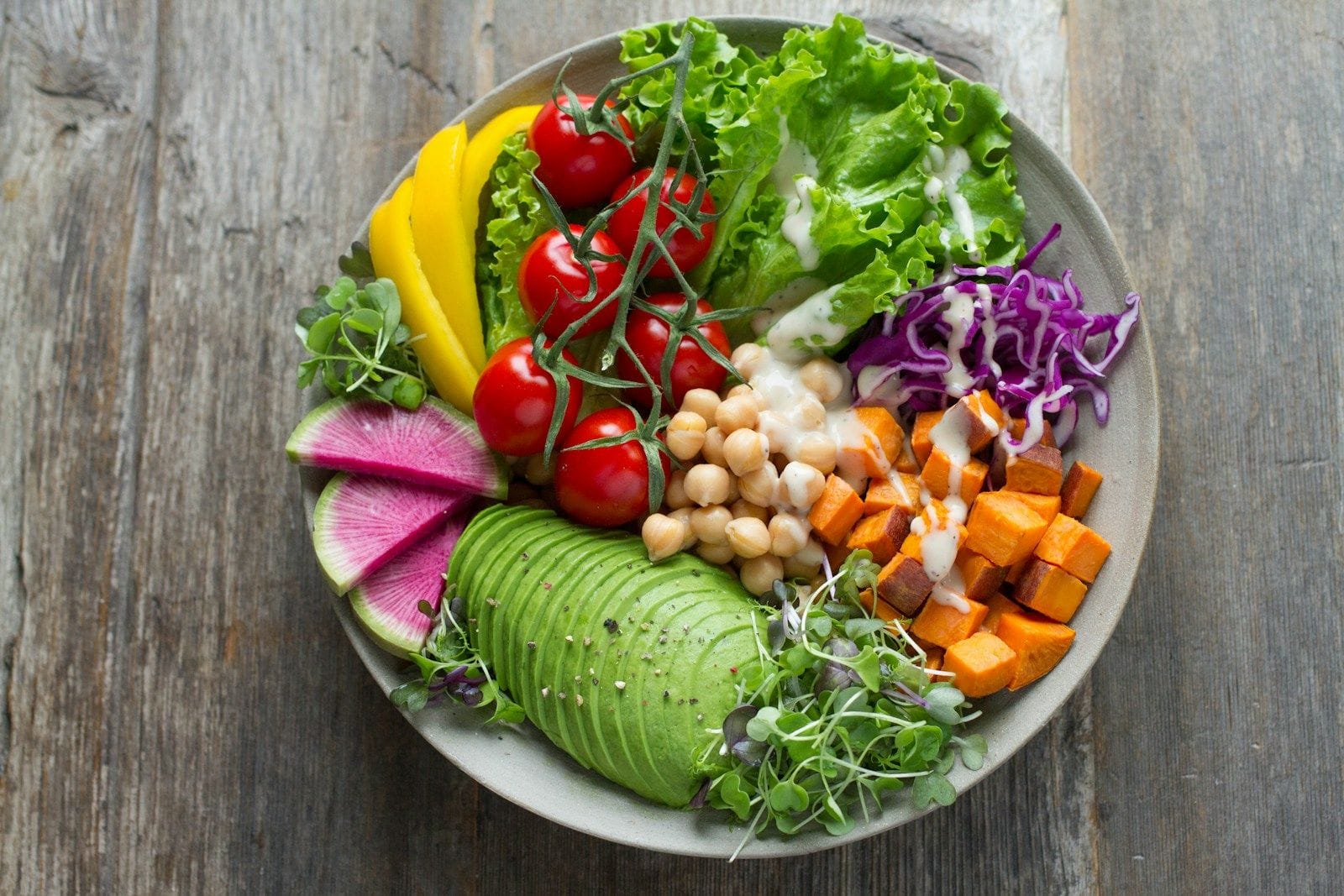
If you eat vegan, you consume no animal products. That can create specific nutrient gaps, depending on how well you plan. A well-planned vegan diet is considered safe; a poorly planned one is not. This article explains, for information only, which blood values are commonly looked at on a vegan diet, what they measure and how reference ranges can be interpreted.
No pro- or anti-vegan agenda here — just facts and measured values.
Note: This article is for general information. It is not medical advice and not a recommendation to take dietary supplements. Intake, dose and therapy should be clarified with a doctor.
What Sets Vegan Eating Apart
Vegan means no animal products at all: no meat, no fish, no dairy, no eggs, no honey. Plant-based eating is broader — it allows occasional animal foods.
The biological issue: some nutrients are found primarily or exclusively in animal foods. Others are present in plants but with significantly lower bioavailability. Both create risks that stay invisible without monitoring — deficiency symptoms often appear only years later.
For an introduction to reading lab results, see the guide on understanding blood values.
Critical Nutrients at a Glance
| Nutrient | Risk for vegans | Marker and reference |
|---|---|---|
| Vitamin B12 | Very high — no reliable plant source | Holo-TC >50 pmol/l, MMA <271 nmol/l |
| Omega-3 (EPA/DHA) | High — ALA barely converts | Omega-3 index >8% |
| Iron | Medium-high — lower bioavailability | Ferritin 30–150 ng/ml |
| Iodine | High — no fish, variable seaweed content | Urinary iodine 100–200 µg/l |
| Zinc | Medium — phytates inhibit absorption | 70–120 µg/dl |
| Selenium | Medium — soil-dependent | 80–150 µg/l |
| Vitamin D | Same as omnivores — sun exposure lacking | 40–60 ng/ml (25-OH) |
| Calcium | Medium — plant sources can suffice | Ionized Ca: 1.15–1.35 mmol/l |
| Choline | Often underestimated | No established routine lab value |
| Vitamin A | Beta-carotene conversion varies | Retinol 0.7–2.8 µmol/l |
Vitamin B12: The Most Critical Nutrient
Vitamin B12 is considered the single most critical nutrient on a vegan diet. There is no reliable plant-based source.
Nori, spirulina and fermented foods contain B12 analogues (pseudo-B12) that are biologically inactive and can even interfere with absorption of real B12. The liver stores B12 for 3 to 5 years — which is why deficiency develops slowly and is often only detected once neurological damage has occurred.
What professional societies say: They point out that an additional B12 intake may become necessary on a vegan diet. Whether, in what form and in what amount is decided by the doctor on the basis of lab values.
What is measured in the lab:
- Holo-Transcobalamin (Holo-TC): The functional B12 level. Values above 50 pmol/l are often used as a reference point for adequate supply; below 35 pmol/l indicates deficiency.
- Methylmalonic acid (MMA): Rises before serum cobalamin drops. Reference: below 271 nmol/l. MMA is more sensitive than total serum B12.
- Serum cobalamin alone is not enough — it also captures inactive B12 forms and can appear falsely normal.
Your Holo-TC is 38 pmol/l even though you already supplement B12 under medical guidance? In Lab2go, you see the trend and have it at hand when you discuss with your doctor whether the dose set by your doctor is enough.
More about B vitamins and their roles in the B vitamins complex guide.
Omega-3: Algae Oil as a Vegan EPA/DHA Source
ALA (alpha-linolenic acid) from flaxseed, walnuts and chia seeds is an omega-3 fatty acid — but it is not EPA or DHA. The body can convert ALA to EPA and DHA, but the rate is below 5 percent for EPA and below 0.5 percent for DHA. Whether that is enough for cardiovascular health, inflammation regulation and brain function is being investigated in studies; the evidence on clinical effects is limited. Where the omega-3 index typically lies in Germany and Europe is shown in our omega-3 index statistics for Europe.
Algae are the original source — fish contain omega-3 because they eat algae. Algae oil is vegan and contains the fatty acids EPA and DHA directly.
What is measured in the lab:
- Omega-3 index: Share of EPA+DHA in red blood cells. A value above 8 percent is often cited as a reference point; below 4 percent is regarded as the cardiovascular risk zone.
Further information on effects and the state of research in the omega-3 guide. Whether a product is appropriate should be clarified with a doctor.
Iron: Bioavailability Is the Key
Plants contain iron — but as non-heme iron, which the body absorbs at a rate of 5 to 12 percent. Heme iron from meat is absorbed at 15 to 35 percent. The difference is significant.
Additional inhibiting factors in vegan diets:
- Phytates in legumes and grains bind iron and make it indigestible
- Tannins in tea, coffee and red wine inhibit absorption
- Calcium competes with iron for the same transporters
Known enhancing factors:
- Vitamin C with the meal doubles or triples non-heme iron uptake
- Soaking and sprouting legumes breaks down phytates
- Eating iron-rich and calcium-rich foods separately avoids mutual inhibition
What is measured in the lab:
- Ferritin: A reference of 30 to 150 ng/ml is cited. Below 30 ng/ml, iron stores are depleted, even if hemoglobin still appears normal.
- Transferrin saturation: 15 to 50 percent. Below 15 percent indicates functional iron deficiency.
- Hemoglobin as a rough marker — drops only when deficiency is advanced.
Risk of iron excess: Excess iron is harmful. Iron products are therefore usually considered only after lab-confirmed deficiency and under medical supervision. Background in the iron guide.
Zinc: Phytates as Antagonists
Legumes, whole grains and nuts contain zinc — but also lots of phytic acid. Phytates bind zinc in the gut and reduce uptake by 15 to 35 percent compared to an omnivorous diet.
Diet-related factors for absorption:
- Soaking legumes for 12 to 24 hours and discarding the soaking water breaks down phytates
- Sourdough bread instead of whole grain bread (fermentation breaks down phytates)
- Sprouted seeds and sprouts
What is measured in the lab:
- Serum zinc: Reference 70 to 120 µg/dl. Values below 70 µg/dl are regarded as low; cause and next steps are clarified by the doctor.
- Zinc levels can drop temporarily during acute infections — a measurement during acute illness is of limited value.
Interaction: Zinc and iron compete for the absorption pathway. Background in the zinc and selenium guide.
Iodine: Your Thyroid Needs Seawater
Fish and dairy are the main iodine sources in Europe. Both are absent from a vegan diet. Iodized salt contributes to supply but often does not cover it alone.
Seaweed varies enormously: nori and wakame contain comparatively moderate amounts of iodine. Dried kombu, by contrast, can contain many times the usual daily requirement and is regarded as unsuitable for daily consumption because of the risk of thyroid overstimulation.
What is measured in the lab:
- Urinary iodine (spot urine): 100 to 200 µg/l as a reference. Below 50 µg/l indicates deficiency.
Whether additional iodine makes sense depends on diet, thyroid status and lab values. Both too little and too much iodine can affect the thyroid — this should be clarified with a doctor.
Selenium, Vitamin D, Calcium, Choline
Selenium is heavily soil-dependent. Northern European soils are selenium-poor, so even omnivores often have suboptimal levels. Brazil nuts are regarded as the most natural source; regularly eating large amounts risks toxicity. Serum reference: 80 to 150 µg/l.
Vitamin D is just as problematic for vegans as for omnivores — the main driver is lack of sun exposure, not diet. Vegan vitamin D3 is derived from lichen. Its interplay with vitamin K2 is discussed in connection with calcium regulation. Reference range for 25-OH vitamin D: 40 to 60 ng/ml.
Calcium is available from plant sources if the right ones are chosen: broccoli and kale (better bioavailability than milk per calorie), almonds, sesame (tahini), calcium-set tofu, calcium-fortified plant milks. Calcium products in large amounts are associated with increased cardiovascular risk — so whether a product is needed should be clarified with a doctor.
Choline is systematically underconsumed by vegans. It is essential for liver function, fat metabolism and the nervous system. Sources: soybeans, quinoa, cauliflower, broccoli — but the amounts rarely add up. Intake recommendations exist for women and men; there is no established routine lab value.
Nutrients Found Only in Animal Foods
Creatine, L-carnitine, taurine and carnosine are absent or trace in plants. Vegans have measurably lower levels. This is not a classical deficiency — the body synthesizes these compounds — but status is low.
Creatine: Stored mainly in skeletal muscle and the brain. Vegans have 20 to 30 percent less intramuscular creatine. Studies investigate creatine in relation to physical and cognitive performance; the evidence is limited to inconsistent, depending on the question.
L-carnitine: Synthesized from lysine and methionine. Often at the lower end of normal in vegans. It is considered clinically mainly when fatigue is present.
Taurine: Synthesized endogenously from methionine and cysteine, but in limited amounts.
Vitamin A (retinol): Not present in plants. Beta-carotene must be converted to retinol. In 30 to 45 percent of people, this conversion is significantly impaired due to BCMO1 gene variants. Someone who eats lots of carrots but converts poorly can still develop functional vitamin A deficiency.
Protein: Combination Is the Key
Reference values of about 1.0 to 1.6 g/kg body weight are cited for vegan diets; for active people and athletes, 1.4 to 1.8 g/kg.
Plant proteins often lack a complete amino acid profile:
- Grains (rice, wheat): low in lysine
- Legumes (beans, lentils): low in methionine
- Combining both over the course of the day provides all essential amino acids
Protein sources with a complete profile: soy (edamame, tofu, tempeh), quinoa, hemp seeds. These do not need to be combined.
High-Risk Groups: Who Needs Extra Attention
Pregnant and breastfeeding women. B12 deficiency can cause neurological damage in the child. Iodine deficiency impairs brain development. DHA is essential for fetal brain growth. Medical supervision and close lab monitoring are indispensable here — self-tracking alone is not enough.
Children and teenagers. Growth and brain development have high demands. The German Society for Nutrition recommends vegan diets for children only under medical supervision with continuous monitoring.
Endurance and strength athletes. Protein, creatine, iron and B12 are topics with elevated monitoring needs; the intervals are set by the treating doctor. Lab2go makes biomarker tracking over time straightforward.
Older adults. B12 absorption declines with age due to reduced intrinsic factor production in the stomach. Whether and in what form vegan seniors should supplement should be clarified with a doctor.
Common Myths Debunked
“Spirulina covers B12.” No. Spirulina contains pseudo-B12 that can interfere with absorption of the real vitamin.
“Flaxseed gives me enough omega-3.” ALA is not EPA or DHA, and the conversion rate is low. A direct vegan source of EPA and DHA is algae oil.
“Spinach is a great iron source.” Spinach contains iron, but also high amounts of oxalic acid which strongly inhibits absorption. Without vitamin C with the meal and with tea or coffee alongside, very little iron is actually absorbed.
“Raw food blocks iodine absorption.” Cruciferous raw vegetables contain glucosinolates which can inhibit iodine uptake at very high intakes — but in normal amounts this is not clinically relevant.
Context: Supplements on a Vegan Diet
This overview is information, not a recommendation. Whether a nutrient is supplemented is decided by the doctor on the basis of individual lab values.
| Nutrient | What is known | Risks and interactions |
|---|---|---|
| Vitamin B12 | No reliable plant source; pseudo-B12 is inactive | Serum cobalamin can be falsely normal; Holo-TC and MMA are more informative |
| Algae omega-3 (EPA/DHA) | Direct vegan source of EPA/DHA; ALA conversion is low | The omega-3 index serves as a trend marker; evidence on clinical effects is limited |
| Vitamin D3 (lichen-derived) | 25-OH vitamin D as marker; deficiency depends mainly on sun exposure | Interplay with vitamin K2 and calcium metabolism |
| Iodine | Intake often marginal on a vegan diet; seaweed content varies widely | Too little and too much iodine can affect the thyroid |
| Zinc | Phytates reduce absorption | Competes with iron; temporarily low during infections |
| Creatine | Lower muscle levels in vegans | Evidence on performance and cognition limited to inconsistent |
| Choline | Intake often low in vegans | No established routine lab value |
| Iron | Non-heme iron is absorbed less well | Excess is harmful; only considered under medical supervision after lab-confirmed deficiency |
Lab Monitoring Routine for Vegans
Commonly cited checks every 6 to 12 months (every 6 months during the first year; the actual intervals are set by your doctor):
- Complete blood count (CBC)
- Ferritin + transferrin saturation
- Holo-Transcobalamin (Holo-TC) + MMA
- 25-OH vitamin D
- Serum zinc
- Whole blood selenium
- Urinary iodine (spot test)
- Omega-3 index
Optional, depending on symptoms:
- Copper
- Ionized calcium
- Choline/betaine
- Retinol (vitamin A)
Does the first blood test after switching to a vegan diet show, say, ferritin at 22 ng/ml and Holo-TC at 31 pmol/l? In Lab2go, the values can be documented and the trend viewed over time. The pricing plans are open to see — a basic panel costs 40 to 90 euros as an out-of-pocket test.
For deeper context on reading results, see the guide on micronutrient deficiencies in bloodwork.
Summary
A vegan diet works — with monitoring. Without regular blood tests, B12 deficiency, iron deficiency and iodine deficiency stay invisible until they cause symptoms. Regular lab checks make changes visible early.
What structured monitoring involves:
- Record baseline values. Holo-TC, MMA, ferritin, omega-3 index, 25-OH vitamin D, zinc, selenium, urinary iodine.
- Document the trend. Compare values over time, taking fluctuations and confounders such as infections into account.
- Discuss findings with a doctor. Whether measures are needed, in what form and in what amount, is decided by the doctor.
The Lab2go features help structure tracking — or a pricing plan that fits the monitoring schedule.
This article does not replace medical advice. Intake, dose and therapy should be clarified with a doctor. Pregnant women, children and people with underlying health conditions should follow a vegan diet only under medical supervision.
Article FAQ
- Which blood values are most relevant for vegans?
- The most critical markers are Holo-Transcobalamin (Holo-TC) and Methylmalonic Acid (MMA) for vitamin B12, ferritin and transferrin saturation for iron, 25-OH vitamin D, serum zinc, selenium, urinary iodine, and the omega-3 index. Testing at least once a year is often cited — twice a year during the first year on a vegan diet. Which values make sense for you, and at what intervals, is decided by your treating doctor.
- Why is vitamin B12 considered critical on a vegan diet?
- There is no reliable plant-based B12 source. Nori, spirulina and nutritional yeast contain B12 analogues (pseudo-B12) that are biologically inactive and can even interfere with absorption of the real vitamin. Liver stores are reported to last 3 to 5 years, after which deficiency values can appear. Control markers are Holo-TC (values above 50 pmol/l are often used as a reference point) and MMA (below 271 nmol/l). Whether and in what form B12 is supplemented should be clarified with a doctor.
- Is ALA from flaxseed enough as an omega-3 source?
- ALA (alpha-linolenic acid) from flaxseed, walnuts and chia seeds can be converted to EPA and DHA in the body. Conversion rates are reported as below 5 percent for EPA and below 0.5 percent for DHA. How this affects tissue status is shown by the omega-3 index in blood. Algae oil is a vegan source that contains EPA and DHA directly; whether such a product is appropriate for you is best clarified with a doctor.
- Vegans eat a lot of iron from plants — why is ferritin often still low?
- Plant iron is non-heme iron. Bioavailability is 5 to 12 percent, compared to 15 to 35 percent for heme iron from meat. Phytates in legumes and grains and tannins in tea and coffee further inhibit absorption. According to the available data, vitamin C with a meal can double or triple non-heme iron uptake, while calcium or tea at the same meal can weaken that effect. A low ferritin value should be clarified by a doctor before any measures are taken.
- What role does iodine play on a vegan diet?
- Fish and dairy are the main iodine sources in Europe; both are absent from a vegan diet, so intake is marginal in many vegans. Iodized salt contributes but does not always cover the requirement on its own. Seaweed iodine content varies widely; dried kombu can contain many times the usual daily requirement, which can overstimulate the thyroid. The marker is iodine in spot urine. Whether additional iodine makes sense also depends on thyroid status and should be clarified with a doctor.
- What does the research say about creatine, carnitine and taurine on a vegan diet?
- These compounds are found almost exclusively in animal foods. Vegans have measurably lower blood levels, which often remains clinically unremarkable because the body forms them in part itself. Studies investigate creatine in relation to physical and cognitive performance; the evidence is limited to inconsistent, depending on the question. L-carnitine is mainly considered clinically when fatigue is present. Taurine is formed from methionine and cysteine, but in limited amounts. Whether supplementation is appropriate is a medical decision.
- Is a vegan diet safe during pregnancy?
- It is possible but requires medical supervision and close monitoring. Needs for vitamin B12 (deficiency can be associated with neural tube defects in the child), iodine, iron, omega-3 (DHA for brain development) and calcium are elevated. Self-tracking alone is not enough here — gynecological and lab-based checks and their intervals are set by the treating team.
- Why is vitamin A a topic on a vegan diet?
- True vitamin A (retinol) is only found in animal foods. Plant sources supply beta-carotene (pro-vitamin A), which must be converted by the body. In 30 to 45 percent of people, this conversion is significantly impaired due to genetic variants in the BCMO1 gene. Someone who eats plenty of carrots and sweet potatoes but is a poor converter can still have a functional vitamin A deficiency. Retinol can be measured in blood; interpretation belongs in medical hands.
- What matters for protein intake on a vegan diet?
- Reference values of about 1.0 to 1.6 g/kg body weight are cited for vegan diets, toward the upper end for athletes. Plant proteins often have an incomplete amino acid profile — grains are low in lysine, legumes are low in methionine. Combining both over the course of the day balances this out. Soy, quinoa and hemp seeds provide all essential amino acids on their own.
- Which interactions between nutrients are known, and when should I clarify this with a doctor?
- Iron and zinc compete for the same absorption pathway, calcium inhibits iron absorption, and fat-soluble vitamins (D, K2) are absorbed together with fat. Such interactions are one reason not to decide on intake and dose yourself, but to clarify them with a doctor — especially with pre-existing conditions, pregnancy, medication or abnormal lab values. In Lab2go, values and trends can be documented in a structured way and prepared for the conversation with your doctor.
This article is for general information only and is not a substitute for individual medical advice, diagnosis, or treatment. Discuss any changes to your diet, supplementation, or medication with a qualified healthcare professional.

Maritta Schmid, Heilpraktikerin (licence under the German Heilpraktikergesetz; non-medical health practitioner), Licence under the German Heilpraktikergesetz, issued by Gesundheitsamt Heilbronn (February 2010), Supervisory authority: Landratsamt Ostalbkreis – Gesundheitsamt Aalen
Heilpraktikerin & Founder
Schwäbisch Gmünd, Germany
Connects health data, technology, and practical routines for real behavioral change.