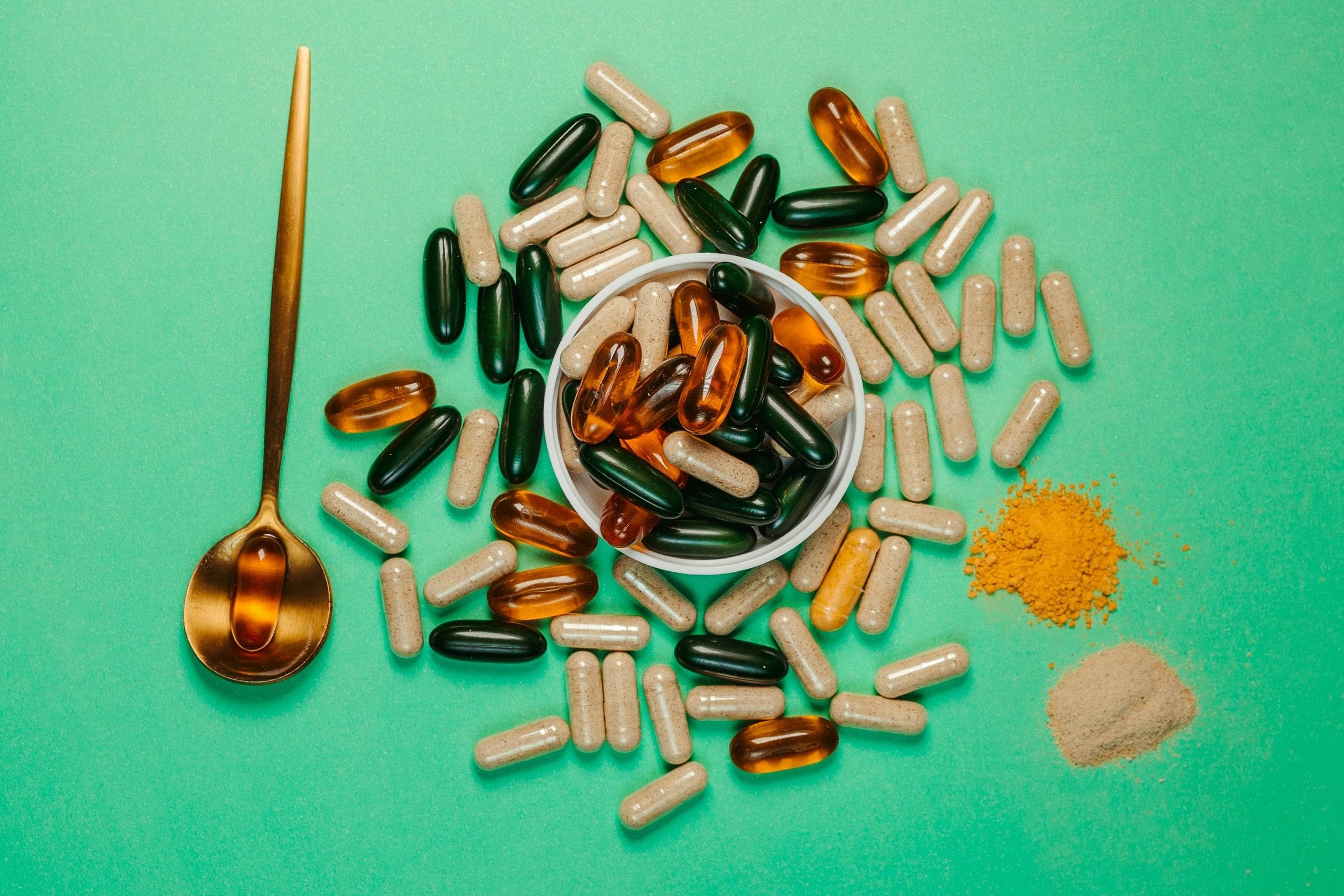
TL;DR: Adaptogens are plant substances and mushroom extracts that studies examine mainly for stress, sleep and cognition. The evidence is limited and mixed, and interactions with medication are possible. This article gives no recommendation for use: intake, dose and treatment belong in a physician’s hands.
This article is purely informational and does not replace medical advice. Whether a product comes into question at all, and at what physician-determined dose, is decided by the treating physician. With medication, pregnancy or autoimmune conditions, medical clarification beforehand is essential.
What an Adaptogen Is
The term “adaptogen” was coined in 1947 by the Russian pharmacologist Nikolai Lazarev. His colleague Israel Brekhman defined three criteria in 1968 that still apply today:
- Non-specific. The effect increases resistance against various stressors — physical, chemical, biological.
- Homeostasis-promoting. By definition, the compound is meant to influence physiological values toward the normal range; whether this is shown for individual substances is open.
- Non-toxic. By definition the substance is meant to be non-toxic. This is a definitional criterion, not a safety statement; risks and interactions are covered below.
By these criteria, Ashwagandha (Withania somnifera), Rhodiola rosea, and Panax ginseng count as classic adaptogens. Newer “adaptogens” like Lion’s Mane and Reishi are strictly speaking nootropics or immune modulators. They act more specifically and do not fulfill all Brekhman criteria.
An example of how a lab value is put in context: cortisol is 22 µg/dl in the morning and still 8 µg/dl in the evening. In Lab2go, such a diurnal curve can be documented and viewed over time. Whether a pattern is abnormal, and what might lie behind it, is for a physician to interpret.
Key Adaptogens at a Glance
The table summarizes which topics are named in research and marketing and what is pointed out regarding risks. It is not a recommendation for use.
| Substance | Topics named | Key cautions |
|---|---|---|
| Ashwagandha | stress, sleep, cortisol | thyroid (TSH), pregnancy, autoimmune conditions, possible serotonin interactions |
| Rhodiola | focus, mental stamina | bipolar disorder, SSRIs and MAO inhibitors, possible sleep disturbance |
| Panax ginseng | energy, cognition, libido | blood pressure, blood thinners, antidiabetic drugs |
| Eleuthero | gentle energy | described as better tolerated than Panax |
| Tulsi (Holy Basil) | cortisol | safety profile described as good |
| Schisandra | liver, focus | keep liver values in view, check interactions |
| Reishi | immune modulation, sleep | autoimmune conditions, thin evidence |
| Lion’s Mane | NGF, cognition | rare asthmatic reactions, clarify with a physician before surgery |
| Cordyceps | endurance | inconsistent evidence, autoimmune conditions |
| Mucuna pruriens | dopamine, mood | contains L-DOPA, medical clarification especially important |
Now in detail, compound by compound.
Ashwagandha: Evidence and Risks
Ashwagandha (Withania somnifera) is the most thoroughly studied adaptogen overall. Active compounds are withanolides, a group of steroidal lactones. According to current understanding they modulate the GABA system and dampen the HPA axis.
Evidence. Chandrasekhar et al. (2012) reported a more pronounced fall in serum cortisol than with placebo after 60 days, along with reduced stress and anxiety scores. Lopresti et al. (2019) also found a larger drop in morning cortisol than placebo over 60 days with a different standardized extract. A 2021 meta-analysis describes consistent effects on perceived stress, sleep quality, and anxiety. All results apply to the extract that was studied, and the overall evidence is limited.
Extracts. Standardized root and root-and-leaf extracts dominate the market, and they differ in withanolide content. Study results therefore cannot simply be carried over from one product to another.
Further research. Studies also look at testosterone: in men with a low baseline (below 400 ng/dl), changes were reported, while with a normal baseline the effect stayed modest. Background on the lab value is in the article on natural testosterone optimization.
Risks. Ashwagandha can lower TSH and may be problematic in hyperthyroidism. It is contraindicated in pregnancy. It is considered relatively contraindicated in autoimmune conditions because immune modulation can trigger flares.
Rhodiola rosea: Evidence and Risks
Rhodiola rosea grows in Arctic regions and contains two active groups: rosavins and salidrosides. The proposed mechanisms are monoamine modulation (serotonin, dopamine, norepinephrine) and mitochondrial protection.
Evidence. Spasov et al. (2000) described less mental fatigue among students during an exam period. Olsson et al. (2009) documented improvements in burnout symptoms after 28 days. Both investigations are limited in size and strength of evidence.
Effect profile. Rhodiola is not regarded as a caffeine substitute in the sense of acute energy. The effects described are subtler, relating to mental stamina on long tasks. It can be activating and, in some people, disturb sleep.
Risks. In bipolar disorder, Rhodiola can trigger manic episodes. Interactions with SSRIs or MAO inhibitors are possible, so medical consultation is required.
Panax Ginseng and Eleuthero
Panax ginseng (Asian ginseng). Active components are ginsenosides. Topics named are energy, cognition, libido, and immune function. Panax ginseng can raise blood pressure and interacts with blood thinners and antidiabetic drugs. It is problematic in hypertension.
Eleuthero (Siberian ginseng, Eleutherococcus senticosus). Less potent than Panax, but described as gentler and better tolerated. Here too: with blood pressure problems or medication, clarify with a physician.
Tulsi and Schisandra
Tulsi (Holy Basil, Ocimum sanctum). The Indian holy herb is associated with a mild effect on cortisol and antioxidant properties. Its safety profile is described as good.
Schisandra chinensis. Berries from Traditional Chinese Medicine with described liver-protective and focus-enhancing properties. Anyone watching their liver values should have possible interactions checked by a physician. More in the overview of supplement interactions.
Reishi
Reishi (Ganoderma lucidum) is not a classic adaptogen but an immune modulator with a calming profile. Active compounds are triterpenes and beta-glucans. As a fruiting body extract it is distinguished from mycelium on rice.
Evidence. The data are thin: there are signals for fatigue and quality of life, but no robust evidence. Immune-modulating action should be assessed with caution in autoimmune conditions because it can amplify existing autoimmune processes.
Lion’s Mane
Lion’s Mane (Hericium erinaceus) is the most popular nootropic mushroom. Hericenones and erinacines, which influence nerve growth factor (NGF), are discussed as its basis.
Evidence. Mori et al. (2008) showed cognitive improvements in older Japanese adults after 16 weeks. Nagano et al. (2010) documented effects on depressive symptoms and anxiety in menopausal women after 4 weeks. These are few, small studies.
Side effects. Rare asthmatic reactions have been described in people with allergies. Some users report “brain fog”, and Lion’s Mane may influence wound healing, which is why medical consultation is needed before surgery.
Cordyceps and Mucuna
Cordyceps (Cordyceps militaris, Cordyceps sinensis). The mushroom is marketed for mitochondrial ATP production and better oxygen utilization. There is no robust evidence for an increase in VO2max; the human trials are small and the results inconsistent. Caution applies in autoimmune conditions.
Mucuna pruriens. Contains L-DOPA, the direct dopamine precursor. Because L-DOPA is a medicinal substance, medical clarification is especially important here; the article gives no recommendation for use. It is discussed that sustained influence may lead to feedback inhibition of dopamine synthesis.
Several Adaptogens at Once: Why Assessment Is Hard
When several adaptogens are used at the same time, possible effects overlap (signal overload), and it is no longer possible to say what causes what. Most studies examine a single compound. For the systematic evaluation of changes, the article on supplement stack iteration is a useful reference.
Activating profiles (Rhodiola, Panax ginseng, Cordyceps) and calming profiles (Ashwagandha, Reishi) are described; Lion’s Mane is considered flexible. This describes the state of research and is not instruction. The medication check matters: with SSRIs, MAO inhibitors, blood thinners, antidiabetic drugs or thyroid medication, medical consultation is necessary. Serotonin syndrome is rare but real.
Interactions and Risks at a Glance
| Situation or medication | Substances concerned | Possible consequence |
|---|---|---|
| SSRIs, MAO inhibitors, triptans | Rhodiola, Ashwagandha | theoretically serotonin syndrome |
| Blood thinners, antidiabetic drugs | Panax ginseng | effect may be amplified |
| High blood pressure | Panax ginseng | blood pressure may rise |
| Hyperthyroidism, thyroid medication | Ashwagandha | TSH may fall |
| Autoimmune conditions | Ashwagandha, Cordyceps, Reishi | immune system may be activated |
| Pregnancy | Ashwagandha | contraindicated |
| Bipolar disorder | Rhodiola | manic episodes possible |
| Surgery | Lion’s Mane | wound healing may be influenced |
Further connections are shown in the overview of supplement interactions.
Quality and Standardization
Products differ widely, and study results apply only to the extract that was tested. Experts name four points:
- Standardized extract. The active compound content must be listed. A plain powder entry without the content of marker compounds (such as withanolides) says little.
- Heavy-metal testing. Especially relevant for Ashwagandha and Indian herbs.
- GMP certification. Good Manufacturing Practice is regarded as the minimum.
- Fruiting body for mushrooms. Mycelium on rice often contains less than 10 percent actual mushroom compounds.
This article deliberately names no brands and no sources of supply.
Where the Evidence Is Weak
Not everything marketed as an adaptogen is backed by evidence.
Tribulus terrestris. Sold as a testosterone booster. Evidence is weak: in well-controlled studies with non-competitive athletes, no significant testosterone effect appears. For libido there is weak evidence.
Maca (Lepidium meyenii). Interesting but not a classic adaptogen. Effects on mood and libido are mild and often subjective.
Generic “mushroom blends”. Powders with many different mushrooms in unknown composition allow no statement about effect.
Putting Measurements in Context
Without measurements, much remains gut feeling. Three metrics are commonly looked at, each with the note that interpretation is a medical task.
Cortisol diurnal curve. Measured in the morning (30 minutes after waking), at midday, and in the evening. A typical curve falls from about 10 to 20 µg/dl in the morning to below 5 µg/dl at night. Flat curves or high evening values can point to a disturbed HPA axis but are not a finding in themselves. More in the article on cortisol and stress.
HRV (heart rate variability). A stress marker whose values fluctuate with sleep, training, infections and time of measurement. Changes in RMSSD are meaningful only over time. Details in the HRV guide.
Subjective scales. PSS (Perceived Stress Scale), PSQI (Pittsburgh Sleep Quality Index), and simple ratings for energy, focus, and sleep complement the measurements.
In Lab2go such trends can be documented. A longer trend makes patterns visible but does not replace medical evaluation.
Putting It in Perspective
Adaptogens are not miracle cures. Ashwagandha has the broadest evidence; for the other substances it is limited or inconsistent. Risks and interactions are real, especially with medication, pregnancy, thyroid and autoimmune conditions.
Anyone interested in the topic can prepare without using a product:
- Collect questions. Which topic is at stake: stress, focus, sleep or immunity?
- Record baseline values. Document cortisol diurnal curve, HRV, and sleep quality so a physician can interpret them.
- Clarify with a physician. Intake, dose and treatment belong in medical hands.
The supplement beginners guide is a good starting point. For the digital side, take a look at the features of Lab2go or the plans and pricing.
This article is purely informational, does not replace medical advice and gives no recommendation for use. With pregnancy, autoimmune conditions, or concurrent medication, always consult a physician.
Article FAQ
- What exactly is an adaptogen?
- An adaptogen is a plant-based compound that, by the three Brekhman criteria, is meant to work non-specifically against stress, support homeostasis, and be non-toxic. This is a historical definition, not a statement about safety or efficacy. Classic examples include Ashwagandha, Rhodiola rosea, and Panax ginseng. The term is often used more broadly today to include nootropic mushrooms like Lion's Mane and Reishi, which strictly speaking are not classic adaptogens.
- What does the research on Ashwagandha show?
- Ashwagandha is the best-studied adaptogen. Chandrasekhar et al. (2012) reported a larger fall in serum cortisol than with placebo after 60 days, along with lower stress and anxiety scores. Lopresti et al. (2019) observed something similar for morning cortisol, and a 2021 meta-analysis describes consistent effects on perceived stress, sleep quality and anxiety. The results apply to the extract that was studied and cannot be transferred to every product. Whether any use makes sense in an individual case is for a physician to decide.
- What is known about Rhodiola and Lion's Mane?
- For Rhodiola, Spasov et al. (2000) described less mental fatigue in students during an exam period, and Olsson et al. (2009) reported improvements in burnout symptoms after 28 days. For Lion's Mane, Mori et al. (2008) showed cognitive improvements in older Japanese adults after 16 weeks, and Nagano et al. (2010) reported effects on depressive symptoms and anxiety in menopausal women after 4 weeks. These are individual, mostly small studies; the evidence is limited.
- Are there interactions with medications?
- Yes, several. Adaptogens with serotonergic potential (especially Rhodiola and Ashwagandha) can interact with SSRIs, MAO inhibitors, and triptans and theoretically trigger serotonin syndrome. Panax ginseng raises blood pressure and can affect the action of blood thinners and antidiabetic drugs. Ashwagandha can lower TSH and is problematic in hyperthyroidism. Anyone on regular medication should discuss any use with their treating physician beforehand.
- Which side effects and risks are known?
- Ashwagandha can cause morning drowsiness and gastrointestinal discomfort in sensitive individuals. Rhodiola may cause irritability or sleep disturbance in some people. Lion's Mane has rarely been linked to asthmatic reactions and an unexplained brain fog. Panax ginseng raises blood pressure. In autoimmune conditions, Ashwagandha, Cordyceps, and Reishi call for caution because they can influence the immune system.
- When should I clarify this with a physician?
- Before any use, especially with medication, pregnancy, autoimmune conditions, thyroid disease, bipolar disorder or high blood pressure, and before surgery. If lab values such as cortisol or TSH are abnormal, interpretation also belongs with a physician. This article gives no recommendation for use.
- What is said about product quality?
- Experts point out that study results apply only to the specific standardized extract that was tested and that the content of active compounds should be clearly stated. Heavy-metal testing and GMP certification of the manufacturer are also mentioned. For mushroom extracts, a distinction is made between fruiting body and mycelium on rice; mycelium products often contain less than 10 percent actual mushroom compounds.
- Which measurements can be followed over time?
- Commonly mentioned are the cortisol diurnal curve, heart rate variability (HRV, for example RMSSD) and subjective scales such as PSS and PSQI. All values fluctuate with sleep, training, infections and time of measurement. Single measurements are therefore of limited value; whether a trend is abnormal is for a physician to interpret.
- How solid is the evidence for Reishi, Cordyceps, Tribulus and Maca?
- Weaker than for Ashwagandha. For Reishi there are signals for fatigue and quality of life, but no robust evidence. There is no robust evidence that Cordyceps raises VO2max; the human trials are small and inconsistent. For Tribulus, well-controlled studies in non-competitive athletes showed no significant testosterone effect, and for Maca the effects on mood and libido are mild and often subjective.
- Why is it hard to assess combinations of several adaptogens?
- When several compounds are used at once, possible effects and side effects overlap, so it is no longer possible to say what causes what. Interactions between the compounds and with medication add to this. Most studies examine a single compound. Any combination therefore belongs with a physician.
This article is for general information only and is not a substitute for individual medical advice, diagnosis, or treatment. Discuss any changes to your diet, supplementation, or medication with a qualified healthcare professional.

Maritta Schmid, Heilpraktikerin (licence under the German Heilpraktikergesetz; non-medical health practitioner), Licence under the German Heilpraktikergesetz, issued by Gesundheitsamt Heilbronn (February 2010), Supervisory authority: Landratsamt Ostalbkreis – Gesundheitsamt Aalen
Heilpraktikerin & Founder
Schwäbisch Gmünd, Germany
Connects health data, technology, and practical routines for real behavioral change.