TL;DR: 12 hours fasting for glucose, insulin and triglycerides. 8 to 10 hours are enough for HbA1c and lipids. Pause biotin 3 days before. No intense training for 48 hours. Measure between 7 and 9 a.m. Water always allowed — coffee no. Document every context in Lab2go.
If you want to track your values seriously, you need a protocol. Without clean preparation you measure noise instead of signal — and mistake 20 to 50 percent deviations for real trends.
Why the Protocol Decides the Signal
Two blood draws on the same person in the same week can deliver dramatically different values. The reason is not broken labs or changed biology — it is missing standardization.
A few typical deviations caused by wrong preparation:
- Testosterone: 20 to 30 percent lower when measured in the afternoon instead of morning
- Cortisol: up to 50 percent lower when the draw runs at 11 a.m. instead of 7 a.m.
- Triglycerides: 30 to 100 percent higher when you are not fasting 12 hours
- TSH: fluctuations of 1 to 4 mIU/l depending on time and supplement status
- AST/ALT: 2 to 5 times elevated after intense training
If you want to trust your blood values, you must control the variables you can control. Biology stays chaotic — your protocol should not.
The Fasting Rule: What Really Needs Fasting
Not every marker needs 12 hours of fasting. For many markers fasting is even irrelevant. The following table solves the problem.
| Marker | Fasting Rule | Why |
|---|---|---|
| Fasting glucose | 12 hours strict | Every meal raises glucose acutely |
| Insulin / HOMA-IR | 12 hours strict | Insulin spikes after eating |
| Triglycerides | 12 hours strict | Chylomicrons distort up to 12h post-meal |
| LDL (calculated Friedewald) | 12 hours strict | Formula needs fasted triglycerides |
| HbA1c | Not required | Long-term glucose, meal-independent |
| Total cholesterol, HDL | 8 to 10 hours | Minor postprandial variation |
| ApoB, Lp(a) | 8 to 10 hours | Stable markers, slight variation |
| CBC (complete blood count) | Not required | Cell counts stable |
| Vitamin D (25-OH) | Not required | Half-life 2 to 3 weeks |
| Ferritin | Not required | Iron stores stable |
| TSH, fT3, fT4 | Not required | Circadian rhythms matter more |
| Liver values (AST, ALT, GGT) | Not strictly required | But: no alcohol 48h |
Drinking water is always allowed — and recommended. Dehydration measurably raises hematocrit, albumin and many other values. Drink 300 to 500 ml of still water in the morning so veins are visible.
A practical example: You measure your lipid profile and ate pizza at 9 p.m. The draw is at 8 a.m. — that is 11 hours. Triglycerides may still be elevated. Either postpone the draw, or document the deviation in Lab2go so the context is visible in the next comparison.
Time of Day: Why 7 to 9 a.m. Is the Standard
Many hormones follow a circadian rhythm. If you measure at 7 a.m. today and 11 a.m. in three months, you are comparing apples to oranges.
Cortisol. Peak between 7 and 9 a.m. Afterwards it drops by 30 to 50 percent until noon. If you want to track the cortisol pattern, you must measure in the morning — ideally 30 to 45 minutes after waking (CAR: Cortisol Awakening Response).
Testosterone (men). Peak between 6 and 10 a.m. In the evening values are 20 to 30 percent lower. For meaningful trend analysis, always measure between 7 and 10 a.m. Interpretation details in the testosterone guide.
TSH. Higher in the morning than in the evening. Fluctuations of 1 to 4 mIU/l are normal. Measure consistently at the same time, otherwise changes cannot be separated from measurement methodology.
Growth hormone (GH). Released in pulses, mostly at night. A single measurement is worthless. Instead measure IGF-1 — this is the stable follow-up marker and reliably shows GH status.
Estrogen and progesterone (women). Cycle phase matters more than time of day. Standard: day 3 of the period (early follicular phase) and day 21 (mid-luteal). Time should still be consistent.
Medications and Supplements: The Pause Table
Most deviations in lab values come from supplements or medications that the patient does not even consider “relevant”. This table is your reference tool.
| Substance | Pause Before Draw | Why |
|---|---|---|
| Biotin > 5 mg/day | 3 days (at > 10 mg: 5–7 days) | Dramatically skews TSH, troponin, hCG, PSA |
| Vitamin C > 500 mg | 24 hours | Can disrupt glucose measurement |
| Iron supplement | 24 hours | Acutely raises serum iron |
| L-thyroxine (T4) | Take AFTER blood draw | Measure steady-state, not peak |
| Testosterone gel | 24 hours gap | Acute peaks distort reading |
| Caffeine | 6 to 8 hours | Raises cortisol, insulin |
| Alcohol | 48 to 72 hours | Distorts GGT, triglycerides, uric acid |
| High-dose Omega-3 | 12 hours | Can transiently affect triglycerides |
| Vitamin D | No impact | Half-life 2 to 3 weeks |
| Statins | DO NOT pause | Affects lipids but is your compliance measurement |
Biotin is the number one hidden confounder. Many skin and hair supplements contain 5 to 10 mg biotin per tablet. The consequence: TSH may be measured falsely low, troponin falsely high — this has caused misdiagnoses in emergency rooms. Stop biotin at least 3 days before the blood draw. For megadoses (above 10 mg) better 5 to 7 days.
Never pause statins on your own. Your LDL under statin is the reality of your therapy. A “polished” value without medication has no clinical benefit.
A practical scenario: You take a multivitamin, a hair supplement with 5 mg biotin and vitamin D3. Three days before the measurement you stop the hair supplement. Multivitamin and D3 stay in — their impact is minimal or irrelevant. Document everything in your profile so conditions are identical at follow-up.
Training: Why a 48-Hour Pause Is Mandatory
Intense training distorts dozens of markers. AST and creatine kinase (CK) rise 2 to 5 times after hard strength training or marathon and stay elevated 48 to 72 hours.
Which values exercise distorts:
- AST: 2 to 5 times elevated after strength training, normalizes after 48–72h
- CK (creatine kinase): up to 10-fold elevated after intense workout
- CRP: transiently elevated after cardio, normalizes after 24–48h
- Creatinine: slightly elevated due to muscle breakdown and dehydration
- Uric acid: rises during long endurance loads
- Cortisol: acutely elevated, especially during HIIT
The rule: no intense sessions for 48 hours before critical measurements. Light walking or yoga is unproblematic. For liver value differentiation (AST vs. ALT, De Ritis ratio) the pause is mandatory — otherwise you measure muscle soreness instead of liver state.
Menstrual Cycle in Women
For women of reproductive age, cycle phase is often more important than time of day.
Measuring hormones:
- Day 3 (early follicular phase): LH, FSH, estradiol, progesterone — baseline diagnostics
- Day 21 (mid-luteal): progesterone to confirm ovulation
- Anti-Müllerian hormone (AMH): cycle-independent, measurable anytime
Iron and ferritin: After menstruation blood loss is at its maximum. Measure 1 week after the period ends so values are not acutely depressed. Interpretation details in the iron resistance guide — cross-reference with your panel design.
Other markers: thyroid, liver values, lipids, CBC are cycle-independent. Only time of day and general preparation matter here.
Sample Transport and Hemolysis
Sample quality decides how meaningful the result is. Three markers are particularly sensitive:
Homocysteine. Must be centrifuged within 30 minutes of the draw. Otherwise the value rises 10 to 20 percent per hour due to release from erythrocytes. If your lab cannot guarantee a fast spin, values are useless.
Insulin. Must be transported cold and hemolysis-free. With hemolysis, insulin is degraded by red blood cells — result: falsely low.
Holo-transcobalamin (Holo-TC). Stable, unproblematic. Preferred marker for active vitamin B12.
Hemolysis ruins: potassium (falsely high), LDH, AST, phosphate, magnesium. Causes: too thin a needle, strong aspiration, long tourniquet, intense fist pumping. If the lab reports hemolysis — repeat the measurement.
For panel design methodology read the guide designing biomarker panels.
Seasonal and Stress Effects
Vitamin D. In winter (November to March) values in the northern hemisphere are 20 to 40 percent lower than in summer. Someone with 25 ng/ml in March might be at 40 ng/ml in August — without changing supplementation. Measure consistently in the same season to detect real trends.
Ferritin and iron. Mild seasonal fluctuation possible, usually small.
Acute stress. Cortisol and prolactin rise within minutes. Whoever was stuck in traffic before the draw or had a heated discussion measures artificially elevated values. 5 minutes sitting calmly before the draw is mandatory.
Infection or inflammation. CRP, ferritin (acute phase protein), leukocytes are elevated. Wait 2 weeks after an infection before repeating critical measurements.
The 5-Step Protocol Before Every Blood Draw
This sequence is your standard. Document every stage — that way every measurement stays reproducible.
3 days before the draw:
- Stop biotin-containing supplements (> 5 mg/day)
- No alcohol
- No extremely intense workouts
1 day before the draw:
- Light training at most (yoga, walking)
- Skip high-dose vitamin C
- Pause iron supplement
- Stay well hydrated
12 hours before the draw:
- Last meal (for lipid or glucose measurement)
- Only water from now on
Morning of the draw:
- Drink 300 to 500 ml water
- No coffee, no tea
- Take thyroid medication ONLY AFTER the draw
- Sit calmly for 5 minutes before the needle
During and after the draw:
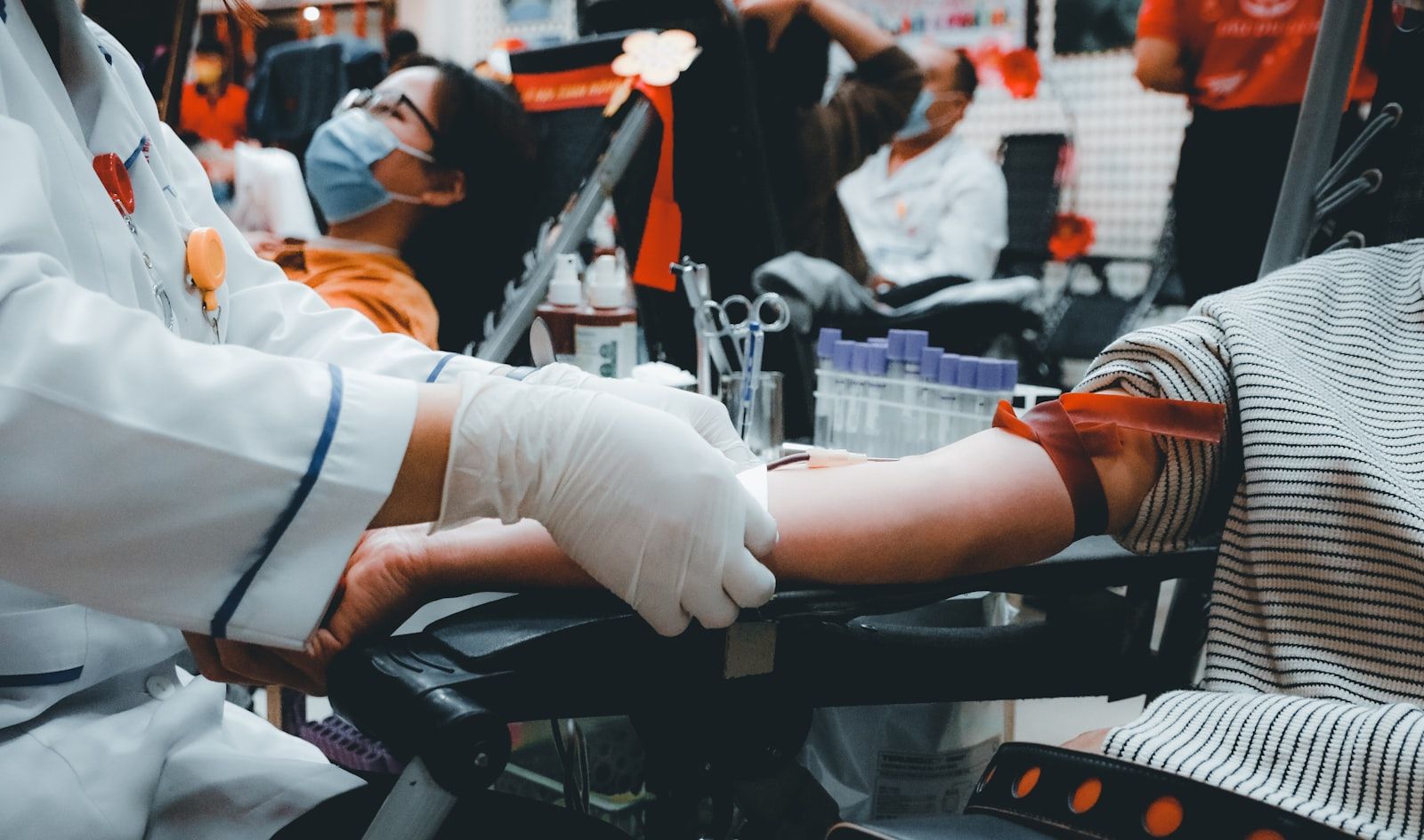
- Keep tourniquet time under 1 minute
- Do not pump fist excessively
- Document exact time of draw
- Enter context in Lab2go: cycle day, sleep, stress, last medications
This checklist is also the entry point for the biomarker baseline you set before every major tracking phase.
Tracking: What to Document
A blood draw without metadata is a point without a coordinate system. These 8 fields should be entered with every measurement:
- Time of draw (hh:mm)
- Last meal (time, rough content)
- Last alcohol (amount, time, or “none for 7 days”)
- Last intense training (type, time)
- Current medications (including last dose)
- Current supplements (full list, last dose)
- Cycle day (for women of reproductive age)
- Subjective state (sleep last night, stress 1–10)
If your insulin value looks higher at your next check than last time, the question is not “did I become more insulin resistant?” — it is “was I really fasting this time?”. Without metadata you cannot answer that.
Conclusion: The Protocol Makes the Difference
Lab values are only as good as the preparation. A sloppily prepared test not only costs you money — it costs you months of tracking time because you mistake noise for signal.
Three steps for your start:
- Standardize your draw. Take the 5-step protocol above and run it through — at every measurement.
- Document context. The 8 metadata fields are mandatory. Without them your trends are random.
- Book morning slots. Schedule all important checks between 7 and 9 a.m. — once and for all.
Start today with the biomarker baseline checklist and document every context digitally. For implementation, the features of Lab2go and the plans and pricing are the next step.
This article does not replace medical advice. If values are abnormal or you have symptoms, always consult a doctor. A clean protocol does not replace medical interpretation — it improves it.
Article FAQ
- How long do I need to fast before a blood draw?
- 12 hours for fasting glucose, insulin, HOMA-IR and triglycerides. 8 to 10 hours are enough for HbA1c, total cholesterol, HDL, ApoB and Lp(a). For CBC, vitamin D, ferritin, TSH and thyroid antibodies, fasting is not required. Drinking water is ALWAYS allowed — dehydration distorts hematocrit, albumin and many other values.
- Why do I need to pause biotin before a blood draw?
- Biotin (vitamin B7) in doses above 5 mg per day dramatically interferes with immunoassays. Affected are TSH, fT3, fT4, troponin, hCG, PSA and many hormones. Depending on the method the effect can be falsely high or falsely low. Pause biotin at least 3 days before the blood draw — with very high doses (above 10 mg) even 5 to 7 days.
- What time of day is best for a blood draw?
- For cortisol and testosterone between 7 and 9 a.m. — that is when values peak. For TSH, iron and most routine values, mornings between 7 and 10 a.m. are standard. Important: always measure at the same time so trends remain comparable. Differences between morning and evening can be 20 to 30 percent for testosterone and up to 50 percent for cortisol.
- Can I drink coffee before a blood draw?
- No. Caffeine acutely raises cortisol by 20 to 30 percent, affects insulin and constricts vessels. Keep 6 to 8 hours abstinence before the draw. Water is allowed and even recommended — drink 300 to 500 ml in the morning so veins are visible and values are not distorted by dehydration.
- Should I take my thyroid medication on the morning of the blood draw?
- No — take L-thyroxine (T4) AFTER the blood draw. Otherwise you measure an acute peak instead of the steady-state level. The exception: if you want to check compliance, measure with your usual routine. In any case, document exactly when you took your last dose — only then are fT3/fT4 values comparable between measurements.
- How long should I avoid exercise before a blood draw?
- 48 hours before critical measurements, no intense training. AST and CK rise 2 to 5 times after hard strength or cardio sessions and stay elevated 48 to 72 hours. CRP can transiently rise, creatinine too. For routine checks, 24 hours pause is enough. Light walking is not a problem.
- When should women measure hormones in the cycle?
- For classic hormone diagnostics (estrogen, progesterone, LH, FSH), take day 3 of the period — the early follicular phase. For progesterone and confirmation of ovulation, add day 21 (mid-luteal phase). Measure ferritin 1 week AFTER menstruation because blood loss lowers stores. Thyroid and other routine values are cycle-independent.
- Does alcohol affect my blood values?
- Yes, strongly. Alcohol raises GGT, AST, triglycerides and uric acid. Keep 48 to 72 hours abstinence before liver values and lipids. Even a single evening with several drinks can raise GGT by 50 to 100 percent. For hormone diagnostics, 24 hours suffice; for liver panels, 72 hours are the minimum.
- What happens if the blood sample is hemolytic?
- Hemolysis means red blood cells burst in the tube. This ruins potassium (falsely high), LDH, AST, phosphate and magnesium. Causes: too thin a needle, strong aspiration, fist clenching, long tourniquet time. If the lab reports hemolysis, have the values re-measured — especially with abnormal potassium.
- How do I document the context of my blood draw?
- Record at minimum: time of draw, last meal, last alcohol, last intense training, current medications and supplements (including last dose), cycle day for women, stress level, sleep the night before. In Lab2go you attach these metadata directly to every measurement — so you can interpret outliers later instead of mistaking them for a real trend.
This article is for general information only and is not a substitute for individual medical advice, diagnosis, or treatment. Discuss any changes to your diet, supplementation, or medication with a qualified healthcare professional.

Physician focused on preventive medicine, women's health, and connected diagnostics.
Areas of focus
Discussion
Community comments coming soon. Until then, we welcome feedback and questions via email.
E-Mail anzeigen