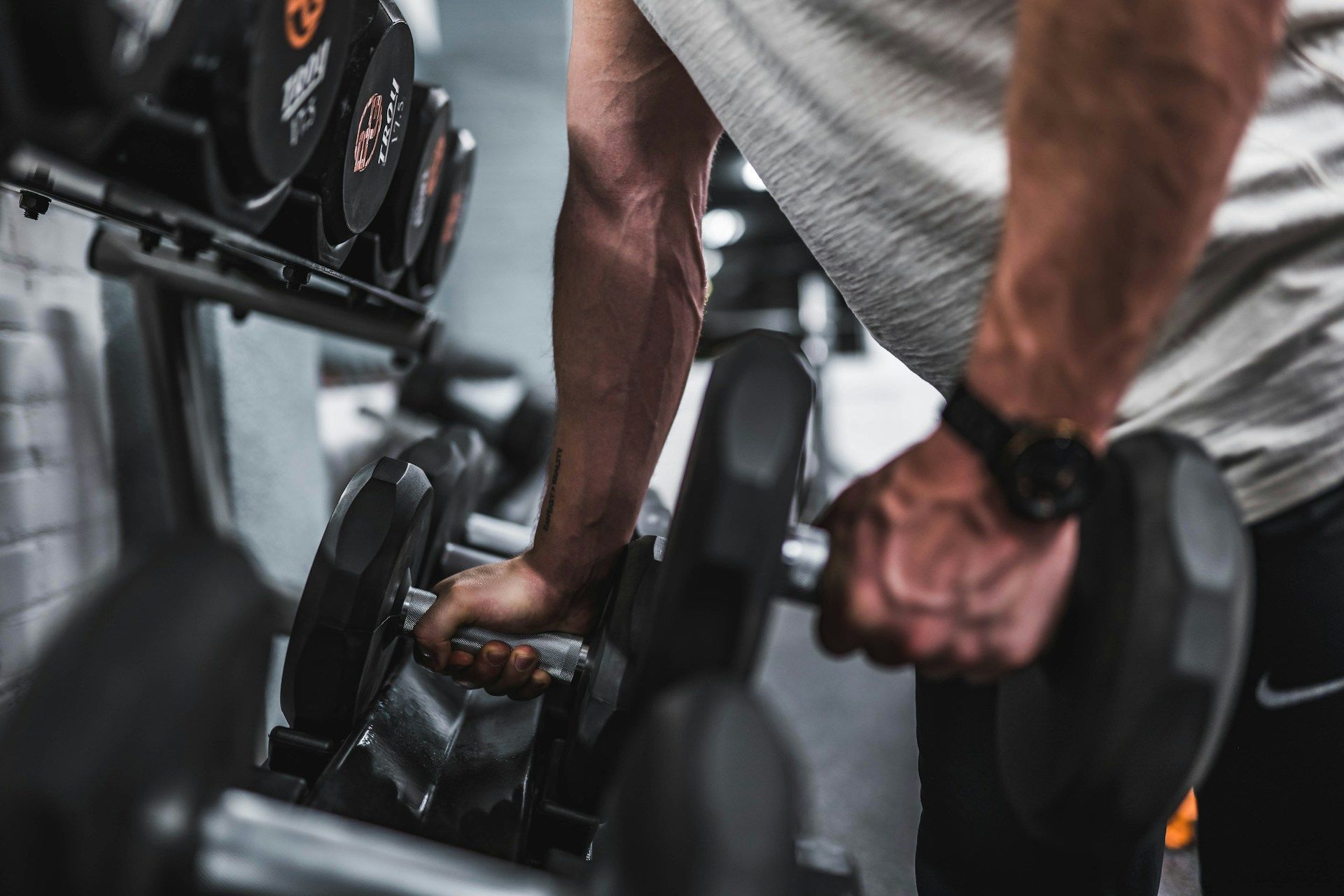
TL;DR: Total testosterone for men 300–1000 ng/dl (optimal 500–800), for women 15–70 ng/dl. Free T (about 2 percent of total) is the decisive marker. Always test together with SHBG. Natural optimization through body composition (12–18 percent body fat for men), sleep (over 7 hours), strength training, vitamin D (40–60 ng/ml), zinc (15–30 mg) and stress management. Consider TRT only when total T is repeatedly below 300 ng/dl with clear symptoms.
This article does not replace medical advice. If you suspect a hormonal disorder, consult a doctor or endocrinologist.
What Testosterone Actually Does
Testosterone drives muscle mass, bone density, libido, mood, cognitive performance, and energy metabolism in both sexes. Normal range in men: 300–1000 ng/dl; in women: 15–70 ng/dl. Production runs through the pituitary-gonadal axis and is regulated by LH. Only free testosterone (about 2 % of total T) is biologically active.
Testosterone is not a male-only hormone. In both sexes it drives muscle building, bone density, libido, mood, cognitive performance and energy metabolism. The difference lies in quantity: men produce roughly ten times the female levels.
Where it is produced and how it is regulated. In men, 95 percent of testosterone is produced in the Leydig cells of the testes, the rest in the adrenal glands. In women, about 50 percent comes from the ovaries and 50 percent from the adrenals. The pituitary controls the loop: LH (luteinizing hormone) drives production, FSH (follicle-stimulating hormone) regulates spermatogenesis.
Binding and bioavailability. In the blood, testosterone is about 98 percent bound — mostly to SHBG (sex hormone-binding globulin) and albumin. Only the remaining 2 percent as free testosterone can enter cells and act. That is why free T is often more meaningful than total T.
A concrete example: your total testosterone reads 520 ng/dl — seemingly fine. But your SHBG sits at 75 nmol/l, clearly elevated, and your free T is only 45 pg/ml. Despite normal total T you feel tired, libido drops, muscle gains stall. In Lab2go you see all three values side by side and spot exactly this pattern.
The Key Lab Values at a Glance
The table below summarizes the standard panel. Reference ranges follow European laboratory standards (2026).
| Marker | Reference Men | Reference Women | What It Shows |
|---|---|---|---|
| Total testosterone | 300–1000 ng/dl (10.4–34.7 nmol/l) | 15–70 ng/dl | Total production |
| Free testosterone | 50–210 pg/ml | 1.0–8.5 pg/ml | Bioavailable fraction |
| SHBG | 10–60 nmol/l | 20–120 nmol/l | Transport protein, binding |
| Bioavailable T | 130–680 ng/dl | — | Free T plus albumin-bound |
| LH | 1.7–8.6 mIU/ml | cycle-dependent 1–90 | Pituitary signaling |
| FSH | 1.5–12.4 mIU/ml | cycle-dependent 1–134 | Spermatogenesis, ovulation |
| Estradiol (E2) | 10–40 pg/ml | cycle-dependent 30–400 | Aromatase activity |
For placing these values in the bigger picture of blood work, read the guide on understanding blood values.
Daily Rhythm: When to Actually Measure
Testosterone follows a clear circadian rhythm. The peak lies between 6 and 9 a.m. By evening values drop by 20 to 30 percent. Those who test in the afternoon systematically get lower results and risk a false deficiency diagnosis.
The rule: blood draw between 7 and 10 a.m., fasting. No training in the 24 hours before. No alcohol in the 48 hours before. With a low first reading, always confirm with a second measurement 2 to 4 weeks later.
Other daily influences: acute sleep deprivation (lowers T by 10–15 percent), severe infection (acute 30 percent reduction), extreme stress (cortisol release suppresses T), fasting for more than 24 hours, recent heavy workouts (acute spike, but can depress values 48 hours later).
Practical scenario: you test at 3 p.m. after a bad night and a morning CrossFit session. Total T: 310 ng/dl, barely above the deficiency threshold. Two weeks later, 8 a.m. fasted, no training: 540 ng/dl. Same man, two very different diagnoses. Document the context with every measurement.
Age-Related Decline and Why It Is Not Fixed
From age 30 on, total testosterone in men drops by an average of 1 percent per year. That adds up: at 60, the average man sits roughly 30 percent below his 30-year-old self. In women, T declines more slowly but continuously, with a sharper drop around menopause.
Why the decline is not inevitable. Most cross-sectional studies compare healthy 30-year-olds with increasingly unhealthy older men. Control for body weight, body fat, sleep quality and chronic disease, and the age-related decline shrinks to 0.3 to 0.5 percent per year. The bulk is lifestyle, not biology.
What really changes with age: SHBG rises roughly 1 percent per year. So free T falls more steeply than total T. The pituitary’s sensitivity to testosterone feedback also decreases. The hormonal axis becomes sluggish, not necessarily dysfunctional.
The biggest lever is therefore not “anti-aging” but stable basics over decades: body fat in range, solid sleep, regular strength training, adequate micronutrients. For a structured baseline, start with the supplement beginners guide.
Symptoms of Low Testosterone
Low T shows up on several levels. Individually each sign is nonspecific. Together they form a typical pattern.
Physical signs. Muscle mass shrinks despite training. Belly fat increases, especially visceral. Morning erections become rare. Beard growth thins. Bone density drops, measurable on a DXA scan in clear deficiency.
Libido and sexual function. The clearest leading symptom. Noticeably reduced desire that is not explained by relationship issues or stress. Erection quality declines, though not always completely.
Energy and mood. Persistent fatigue despite sufficient sleep. Loss of motivation. Depressive mood, often worst in the morning. Irritability. Lower stress resilience.
Cognitive performance. Concentration problems. Weaker working memory. Brain fog. Especially pronounced when combined with other hormonal deficits (thyroid, cortisol).
Caveat: none of these symptoms is proof. Burnout, hypothyroidism, iron deficiency and depression produce similar pictures. Always combine labs with a proper workup.
The 6 Main Causes of Low Testosterone
Excess weight and visceral fat. The most common cause. Belly fat contains aromatase, which converts testosterone into estradiol. At BMI over 30, total T sits on average 25 to 30 percent below normal weight. Losing 10 percent of body weight raises T by 100 to 150 ng/dl.
Sleep deprivation. Testosterone is produced mostly during REM sleep. One week at 5 hours per night lowers T by 10 to 15 percent. Chronic under 6 hours: 20 to 30 percent below 8-hour sleepers.
Chronic stress. Cortisol and testosterone are antagonistic. Persistently elevated cortisol suppresses T at the hypothalamus and pituitary. Burnout patients typically show low T and high cortisol simultaneously.
Micronutrient deficits. Vitamin D below 30 ng/ml, zinc below 70 µg/dl and magnesium below 0.85 mmol/l each correlate independently with low testosterone. Supplementation helps when you are deficient. It adds little at normal levels.
Medications. Opioids suppress T dramatically (often under 200 ng/dl on long-term use). Statins can lower T by 10 to 15 percent. SSRIs, glucocorticoids and certain blood pressure drugs also have negative effects. Beta-blockers are mostly neutral.
Endocrine disruptors. Bisphenol A (BPA) from plastics, phthalates from cosmetics and some pesticides have estrogen-like effects and can disturb the pituitary-gonadal axis. The evidence is stronger in occupationally exposed people, but everyday exposure adds up.
Natural Optimization: What Actually Works
Strength Training
Heavy compound lifts are the strongest non-pharmacological lever. Squats, deadlifts, bench press, pull-ups and overhead press recruit large muscle groups and stimulate the hormonal axis most.
Protocol: 3 to 5 sessions per week, 60 to 90 minutes. 4 to 6 main sets with 5 to 8 reps at 75 to 85 percent of 1RM. Progressive overload. HIIT 1 to 2 times per week as a supplement.
No more than 12 hours of intense training per week. Overtraining lowers T, raises cortisol and increases injury risk. Recovery is part of the protocol.
Sleep
The second foundation. Target: 7 to 9 hours per night at stable times. REM sleep is crucial — it accounts for 20 to 25 percent of total sleep time.
Levers: consistent bedtime (within 30 minutes), dark cool room (17 to 19 °C), no screens 60 minutes before bed, no caffeine after 2 p.m., no alcohol in the evening (suppresses REM), morning routine with daylight within 30 minutes of waking.
Body Composition and Nutrition
Sweet spot for men: 12 to 18 percent body fat. Below that, T can drop (competitive athletes in contest prep). Above that, aromatase activity rises.
Nutrition: enough healthy fats (30 to 35 percent of calories). Cholesterol is a testosterone precursor. Extremely low-fat diets measurably lower T. Protein 1.6 to 2.2 g per kg body weight. Micronutrient density before calorie counting. Details in the guide on cholesterol values.
Micronutrients
- Vitamin D: target 40 to 60 ng/ml. In deficiency, 3000 to 5000 IU D3 daily, ideally combined with K2. See the vitamin D3 and K2 guide.
- Zinc: 15 to 30 mg elemental zinc per day, form bisglycinate or picolinate. Not above 40 mg long term. More in the zinc and selenium guide.
- Magnesium: 300 to 400 mg per day, form citrate or glycinate. Especially valuable under stress and with poor sleep.
- Boron: 3 to 10 mg per day. Lowers SHBG and raises free T. Less well known but well supported.
Adaptogens
Ashwagandha (KSM-66): 600 mg per day over 8 weeks. Lopresti 2019 shows +15 percent total T in stressed men. Also cortisol-lowering.
Tongkat Ali: 200 to 400 mg per day. Mixed evidence, but some RCTs show +10 to 15 percent free T in hypogonadal men.
What Does Not or Barely Works
- Tribulus terrestris: despite marketing, weak evidence. Meta-analyses show no significant testosterone increase in healthy men.
- Fenugreek: mixed results. Some studies positive, others neutral. No clear effect.
- Mucuna pruriens: contains L-DOPA, affects prolactin. Direct T effect not established.
When TRT Makes Sense
Testosterone replacement therapy is not a lifestyle choice. It is a medical treatment with lifelong commitment and side-effect risk. Current endocrinology guidelines define clear criteria.
Indication for TRT:
- Total testosterone repeatedly below 300 ng/dl (two morning measurements 2 to 4 weeks apart).
- Clear symptoms: libido, energy, muscle mass, mood, cognitive performance.
- Secondary causes ruled out: measure LH and FSH, check thyroid, determine prolactin, check iron status.
- 6 to 12 months of consistent natural optimization without sufficient improvement.
- Decision made together with a urologist or endocrinologist.
What TRT means: endogenous production is suppressed. Testicles shrink. Fertility drops or ends (relevant if you want children — discuss alternatives like hCG or clomiphene). Regular monitoring of hematocrit, PSA and estradiol is mandatory.
For a structured baseline of all relevant values, read the guide on understanding blood values.
Testosterone in Women
For women, testosterone is not a minor topic, just a different one. Two clinical scenarios matter most.
PCOS (polycystic ovary syndrome). The most common cause of elevated T in women of reproductive age. Typical picture: total T above 70 ng/dl, elevated free T, SHBG often low, insulin resistance, cycle irregularities, acne, scalp hair loss, facial hair growth. Treatment targets insulin metabolism — metformin, weight reduction and inositol are standard.
Menopause and female andropause. Testosterone drops in parallel with estrogen, starting around age 40. Symptoms: loss of libido, low energy, reduced muscle mass, brain fog. A low free T below 1.0 pg/ml combined with these symptoms is a valid treatment target — under gynecological or endocrinological care.
Important: assessing female androgens is more complex than in men. Always interpret alongside DHEA-S, estradiol and SHBG. Total T alone tells you little in women.
Your Path to Stable Testosterone
Testosterone is not a single value but a system. Total T, free T, SHBG, LH and E2 together give the complete picture. Measuring only total T misses half the relevant information.
Three steps to get started:
- Set a baseline. Morning between 7 and 10 a.m., fasting: total T, free T, SHBG, LH, FSH, E2. Cost: 60 to 120 euros out of pocket.
- Pull the lifestyle levers. Body fat 12–18 percent, sleep over 7 hours, 3 to 5 strength sessions per week, vitamin D 40–60 ng/ml, zinc in the upper third of range.
- Track the trend. Retest after 3 to 6 months. Log context with each measurement: sleep, training, stress, supplement stack.
Start today with the supplement beginners guide for the basics, and check out the features of Lab2go or compare plans and pricing.
This article is information, not medical advice. If you suspect a hormonal disorder, hypogonadism or significantly elevated testosterone in a woman, consult a doctor or endocrinologist. Self-tracking complements medicine. It does not replace it.
Article FAQ
- What is a normal testosterone level?
- For men, total testosterone ranges from 300 to 1000 ng/dl (10.4 to 34.7 nmol/l). For energy and libido, the sweet spot is 500 to 800 ng/dl. For women, the reference range is 15 to 70 ng/dl. Always measure in the morning between 7 and 10 a.m., fasting. Later in the day total T can be 20 to 30 percent lower and lead to misinterpretation.
- Why is free testosterone more important than total testosterone?
- Only free testosterone (about 2 percent of total T) can enter cells and act there. The rest is bound to SHBG and albumin. When SHBG is high, total T can look normal while free T is low, causing typical deficiency symptoms. The reference range for free T in men is 50 to 210 pg/ml. Always measure total T, SHBG and free T together.
- What lowers testosterone?
- The most common causes are excess weight (visceral fat contains aromatase, which converts T to estradiol), sleep deprivation below 6 hours, chronic stress with elevated cortisol, micronutrient deficiencies (zinc, vitamin D, magnesium), certain medications (statins, SSRIs, opioids) and endocrine disruptors from plastics and cosmetics. Aging itself lowers T by around 1 percent per year from age 30 on.
- Which supplements actually raise testosterone?
- Well supported: vitamin D (in deficiency, target 40 to 60 ng/ml), zinc (15 to 30 mg in zinc deficiency), magnesium (300 to 400 mg) and ashwagandha (600 mg KSM-66, Lopresti 2019: +15 percent after 8 weeks). Boron (3 to 10 mg) lowers SHBG and raises free T. Weak evidence: tribulus, fenugreek, mucuna. The effect only shows up when you start from a deficient or suboptimal baseline.
- How much does strength training raise testosterone?
- Acute: right after heavy compound lifts (squat, deadlift) testosterone rises 15 to 40 percent but drops back to baseline within 60 to 90 minutes. Long term more important: regular strength training 3 to 5 times per week raises resting testosterone by 10 to 20 percent after 8 to 12 weeks. Beware overtraining. More than 12 hours of intense training per week can lower T.
- When is TRT appropriate?
- Current guidelines recommend TRT (testosterone replacement therapy) only when at least two morning measurements show total T below 300 ng/dl and clear symptoms are present (libido, energy, muscle mass, cognitive function). Secondary causes must be ruled out first: pituitary issues via LH and FSH, thyroid, prolactin. TRT is lifelong, so only consider after 6 to 12 months of consistent natural optimization.
- Does excess weight really lower testosterone?
- Yes, substantially. Visceral abdominal fat contains the enzyme aromatase, which converts testosterone into estradiol. Men with BMI over 30 have on average 25 to 30 percent lower total T than normal-weight men. Losing 10 percent of body weight raises testosterone by 100 to 150 ng/dl on average. Body fat between 12 and 18 percent in men is the sweet spot.
- What role does sleep play?
- Crucial. Testosterone is produced mainly during REM sleep. Even one week with 5 hours of sleep per night lowers total T by 10 to 15 percent. Chronic sleep under 6 hours lowers T by 20 to 30 percent compared to 8 hours. Priorities: consistent bedtime, dark cool bedroom, no screens 60 minutes before bed, avoid alcohol in the evening.
- Do women have testosterone issues too?
- Yes, in both directions. In PCOS, T is often elevated (above 70 ng/dl), causing acne, hair loss and cycle irregularities. In menopause testosterone drops along with estrogen and DHEA, affecting libido, energy and muscle mass. Women should test total T, SHBG and free T if these symptoms are present. Interpretation is more complex than in men and belongs in the hands of a gynecologist or endocrinologist.
- What does a full hormone panel cost?
- At a general practitioner, the basic panel (total T, LH, FSH, SHBG, E2) costs 60 to 120 euros out of pocket. An extended panel with free T, DHEA-S, prolactin and cortisol runs 150 to 250 euros. Online labs charge 80 to 200 euros. With a medical indication and symptoms, statutory insurance usually covers the cost. Always test in the morning between 7 and 10 a.m., fasting.
This article is for general information only and is not a substitute for individual medical advice, diagnosis, or treatment. Discuss any changes to your diet, supplementation, or medication with a qualified healthcare professional.

Physician focused on preventive medicine, women's health, and connected diagnostics.
Areas of focus
Discussion
Community comments coming soon. Until then, we welcome feedback and questions via email.
E-Mail anzeigen