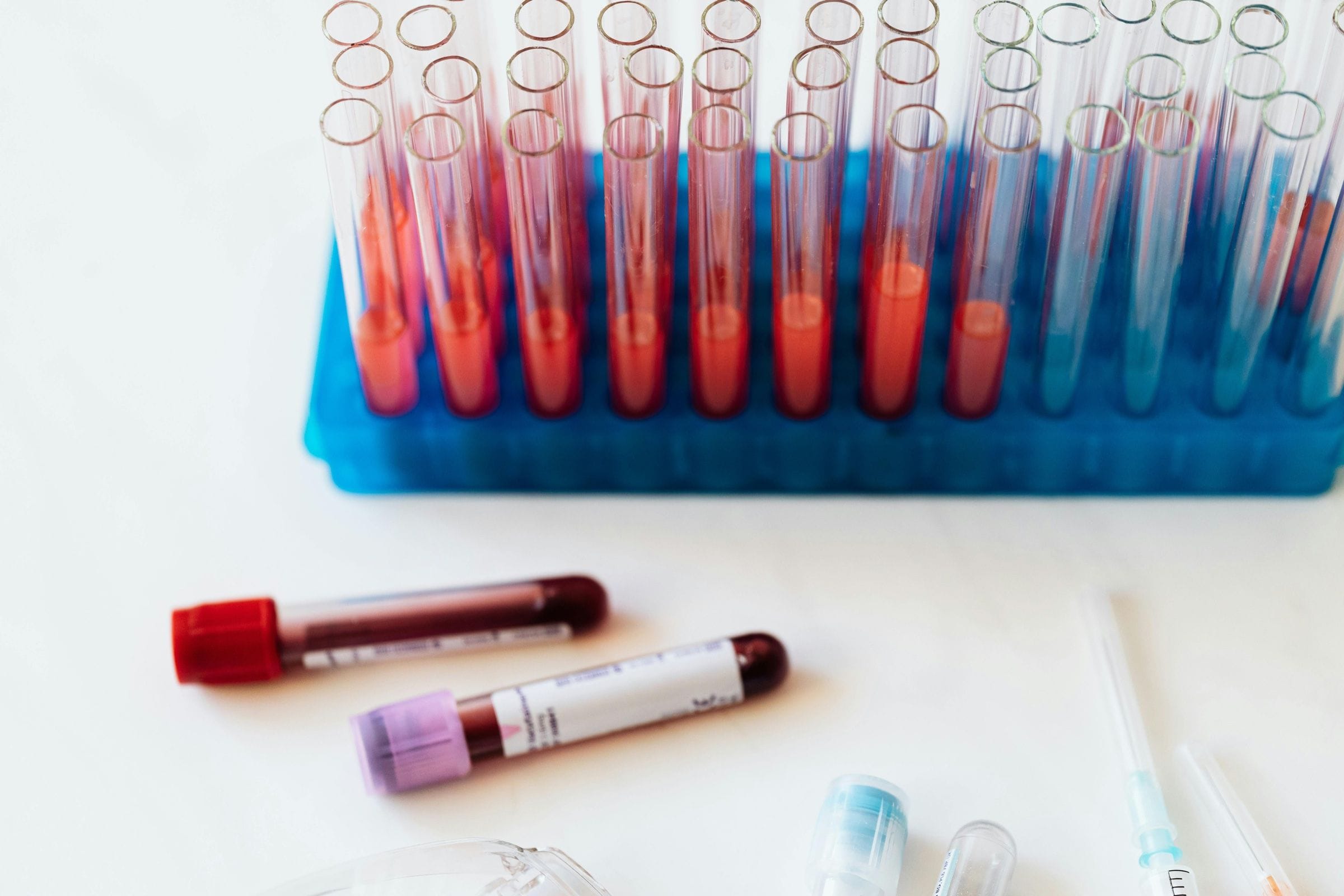
TL;DR: A pre-season panel of 12 markers reveals bottlenecks before they cost performance. Ferritin below 30 ng/ml, elevated cortisol-testosterone ratio and persistently high CRP are the three most common findings in recreational athletes — and all three are fixable. You don’t need to be a professional to benefit from the same blood monitoring that elite teams use.
Why a blood test before the season?
You’ve been training for months. Volume is climbing, races are approaching — but performance is stuck somewhere. Fatigue after training lasts longer than expected. Resting heart rate is higher than last autumn. HRV is dropping.
That could be overtraining, iron deficiency or low vitamin D. All three look identical from the outside. A blood test separates them in 20 minutes.
A pre-season panel serves three purposes. First, it reveals deficiencies slowing your training progress — deficiencies you can correct with targeted supplementation in 6–8 weeks. Second, it gives you a baseline: if values deviate mid-season, you know what your personal normal is. Third, you detect overtraining in the lab 4–6 weeks earlier than through performance decline.
Timing: 6–8 weeks before your first race or the start of your main training phase. Always fasted in the morning, 48–72 hours after your last intensive session. Otherwise acute training load distorts CK, white blood cell count and ferritin.
The Pre-Season Athlete Panel: 12 Markers at a Glance
Here is the complete panel with reference and target ranges for athletes — both columns matter. Laboratory norms apply to “healthy average people.” Athletes frequently need tighter or shifted targets.
| Marker | Unit | Lab Normal | Athlete Target | Significance |
|---|---|---|---|---|
| Ferritin | ng/ml | ≥ 15 (F), ≥ 30 (M) | 60–100 | Iron stores, oxygen transport |
| Haemoglobin | g/dl | ≥ 12.0 (F), ≥ 13.5 (M) | 13.5–15.5 (F), 14.5–17.0 (M) | O₂ transport, endurance performance |
| Vitamin D (25-OH) | ng/ml | ≥ 20 | 50–70 | Muscle strength, immunity, bone |
| TSH | mIU/L | 0.4–4.0 | 1.0–2.5 | Thyroid function, metabolism |
| Free T3 | pmol/L | 3.5–6.5 | 4.0–6.0 | Active thyroid hormone, energy metabolism |
| Testosterone (men) | ng/dl | 280–1100 | 450–900 | Muscle building, recovery, drive |
| Cortisol (morning) | μg/dl | 7–25 | 12–20 | Stress hormone, catabolic at excess |
| CK | U/L | < 200 (F), < 310 (M) | < 300 (F), < 400 (M) chronic | Muscle damage, recovery |
| CRP (hs) | mg/L | < 5 | < 1.0 | Systemic inflammation |
| Magnesium (whole blood) | mmol/L | 1.38–1.65 | 1.7–2.2 | Muscle contraction, recovery, HRV |
| Urea | mg/dl | 10–50 | 20–45 | Protein catabolism, hydration status |
| LDH | U/L | 135–225 | < 250 | Cell damage (muscle, erythrocytes) |
Your ferritin reads 22 ng/ml — “normal” by lab standards, but a clear problem for your training four weeks before a half-marathon. In lab2go you instantly see where that value sits within athlete target ranges.
Iron and Ferritin: The Most Common Bottleneck in Endurance Sport
Ferritin is the single most important marker for endurance athletes — and simultaneously the most misinterpreted. The laboratory “normal” threshold of 15 ng/ml means iron stores are not empty. For athletes it means stores are barely enough to survive on.
Why athletes need more iron:
- Haemolysis from mechanical stress (foot-strike in running destroys red blood cells)
- Sweat iron losses (especially during long endurance sessions)
- Inflammation-triggered hepcidin release after hard training blocks iron absorption for 3–6 hours
- Increased red blood cell turnover from altitude training or intensive phases
Consequences of low ferritin:
Ferritin below 30 ng/ml measurably reduces VO2max — even without overt anaemia. Studies show a VO2max reduction of 3–7% at ferritin below 25 ng/ml compared to ferritin above 60 ng/ml. In a half-marathon that translates to 3–6 minutes of time difference.
Athletic anaemia vs. dilutional anaemia:
Endurance athletes often show lower haemoglobin due to increased plasma volume — this is physiological (dilutional anaemia) and not a problem. True athletic anaemia is present when haemoglobin falls below 13.0 g/dl (men) or 12.0 g/dl (women) and ferritin is below 30 ng/ml. Iron supplementation is then indicated. Read more in the ferritin and iron deficiency guide and the iron supplementation guide.
Hormones: Testosterone, Cortisol and Thyroid
Testosterone and Cortisol: The Ratio Matters
Testosterone and cortisol in isolation tell only half the story. The key is the cortisol-testosterone ratio (C/T ratio). It reflects the balance between catabolic (cortisol) and anabolic (testosterone) processes.
Calculation: Cortisol (μg/dl) ÷ Testosterone (nmol/L)
| C/T Ratio | Interpretation |
|---|---|
| < 0.20 | Anabolic environment, good training adaptation |
| 0.20–0.35 | Normal at moderate training volume |
| > 0.35 | Warning zone: catabolism is dominating |
| > 0.50 | High overtraining risk |
In overtraining, testosterone drops (hypothalamus reduces GnRH signalling) while cortisol remains elevated — the ratio rises. This pattern is measurable 4–6 weeks before typical performance decline appears.
Example: Testosterone 480 ng/dl (= 16.6 nmol/L), morning cortisol 18 μg/dl → C/T ratio = 18 ÷ 16.6 = 1.08 — clearly elevated; reduce training load immediately.
Thyroid: Free T3 Is the Most Sensitive Marker
TSH is often misleadingly normal in athletes. The hypothalamic-pituitary axis responds to energy deficit by suppressing free T3 — while TSH stays normal. Free T3 is the active thyroid hormone driving energy metabolism in every cell.
In RED-S (Relative Energy Deficiency in Sport), free T3 often falls to 3.0–3.5 pmol/L — below lab norm, yet still reported as “normal.” The result: impaired fat oxidation, slower muscle recovery, reduced resting metabolic rate.
Read more about thyroid markers in the thyroid values guide.
Muscle Markers: CK, LDH and Myoglobin
CK (Creatine Kinase)
CK is the most direct measure of muscle cell damage. It rises acutely after intensive training and falls back within 72 hours. For athletes:
- Acute post-training CK rise (up to 1000 U/L): normal, no action needed
- CK 1000–5000 U/L: overloading, 48–72 hours recovery required
- CK persistently above 500 U/L (without recent hard training): signal of chronic muscle stress → reduce training volume
- CK above 5000 U/L: rhabdomyolysis risk, immediate medical evaluation
When to draw blood: Always 48–72 hours after the last intensive session. Drawing CK six hours after a hard interval produces an acute spike, not a chronic picture.
LDH (Lactate Dehydrogenase)
LDH rises with cell damage in both muscle and erythrocytes. In endurance athletes, elevated LDH (250–350 U/L) can indicate mechanical haemolysis — red blood cells destroyed by foot-strike impact during running. Persistently elevated LDH above 350 U/L should be read alongside haemoglobin and ferritin.
Inflammation Markers: CRP and White Blood Cells
CRP (C-Reactive Protein)
CRP measures systemic inflammation. After hard training, CRP rises acutely — this is the desired training stimulus. The problem is CRP that fails to return below 1 mg/L between sessions.
Interpretation framework for athletes:
| CRP Value | Meaning for Athletes |
|---|---|
| < 1.0 mg/L | Optimal: complete recovery |
| 1.0–3.0 mg/L | Mild chronic inflammation (check: nutrition, sleep, training volume) |
| 3.0–10.0 mg/L | Elevated inflammatory load: active intervention needed |
| > 10 mg/L | Acute infection or severe overload: pause training |
Your hs-CRP is 2.8 mg/L three weeks running — despite normal training? This points to poor sleep, insufficient omega-3 or a subclinical infection. Time for a check.
White Blood Cells
In overtraining, white blood cell count drops — the immune system is suppressed. Values below 4.0 × 10⁹/L in athletes with high training volume are a warning sign. You get sick more frequently — which many athletes mistakenly attribute to the training itself.
RED-S and Overtraining Syndrome: When Biomarkers Warn
RED-S (Relative Energy Deficiency in Sport)
RED-S is the updated, sex-neutral definition of the old “Female Athlete Triad.” It affects men just as much as women — wherever caloric intake and training energy demand consistently fail to match.
Laboratory signatures of RED-S:
- Ferritin declining (despite normal diet)
- Free T3 reduced below 3.5 pmol/L
- Testosterone (men) below 300 ng/dl
- IGF-1 suppressed (below 150 ng/ml)
- Cortisol elevated, insulin and fasting glucose very low
RED-S is reversible — but only if you detect it. Increase caloric intake, temporarily reduce training volume, retest ferritin and hormones after 8 weeks.
Overtraining Syndrome (OTS)
OTS is the extreme form of chronic overload. Diagnosis is clinical — there is no single blood test for it. But the lab helps narrow it down.
Marker combination in OTS:
- C/T ratio above 0.40
- Testosterone below 350 ng/dl (men)
- Haemoglobin declining across 2–3 measurement points
- CK chronically above 500 U/L
- White blood cells below 4.0 × 10⁹/L
- HRV persistently below personal baseline trend
No single marker alone makes the diagnosis. Three or more of these patterns together are a strong signal. Read more about HRV as an early warning system in the HRV guide and resting heart rate as a fitness marker.
HRV and Resting Heart Rate: Daily Trend Markers Between Blood Tests
Blood tests are snapshots. HRV (heart rate variability) and resting heart rate deliver data daily. Combined with lab values, they create the full picture.
HRV trends that predict lab findings:
- Declining HRV baseline over 2+ weeks + elevated resting heart rate: blood test will likely show elevated C/T ratio or declining ferritin
- Stable HRV despite increasing training volume: adaptation is working well, lab values probably stable
- Sharp HRV drop after one week with no training change: check infection markers (CRP, white blood cells)
Wearable data does not replace the lab — but it tells you when a blood test makes sense. More on this in the wearable data quality guide.
The 4-Week Test Plan for Recreational Athletes
Here is a concrete workflow for triathletes, runners or CrossFit athletes approaching their first data-driven season.
Week 0 (Pre-Season Blood Draw):
Test: Complete blood count, ferritin, vitamin D (25-OH), TSH, free T3, testosterone (men), morning cortisol, CK, hs-CRP, whole-blood magnesium, LDH, urea.
Timing: Fasted morning draw, minimum 48 hours after last hard session. Document results in lab2go, enter athlete target ranges.
Weeks 1–4 (Targeted Interventions):
- Ferritin below 40 ng/ml → introduce iron supplement (e.g. iron bisglycinate 30–60 mg daily); review blood draw protocol
- Vitamin D below 40 ng/ml → 4000–5000 IU D3 daily
- CRP above 2 mg/L → omega-3 (2–3 g EPA/DHA), prioritise 8+ hours of sleep
- Elevated C/T ratio → reduce training volume by 20%, add one extra rest day per week
Weeks 8–10 (Control Measurement):
Minimum panel: ferritin, vitamin D, CRP, C/T ratio (testosterone + cortisol). What changed? In lab2go you see trend curves — not just the current value.
Full details on systematic biomarker baseline tracking here.
Summary: Blood as a Training Partner
If you keep a training log, you should also keep a blood log. Ferritin, testosterone, cortisol, CK and CRP tell you what is actually happening in your body — independently of what the Garmin screen says.
A pre-season panel costs 80–120 euros and potentially saves you an injury layoff or a completely wasted training block. Transfer your results to lab2go, set athlete target ranges, and do a mid-season control measurement. That is the simplest way to train with data — without a professional budget.
This article does not replace medical diagnosis. For persistently very high CK (above 5000 U/L), severely reduced testosterone, or symptoms such as sustained extreme fatigue, cardiac arrhythmias or joint pain, always consult a doctor.
Article FAQ
- Which blood markers matter most for athletes?
- The most important markers are ferritin (iron stores), haemoglobin, vitamin D, testosterone (men), cortisol, CK (muscle damage), CRP (inflammation), TSH (thyroid) and whole-blood magnesium. A complete pre-season panel costs between 60 and 120 euros as a self-pay service. If you can only test one marker, start with ferritin — iron deficiency is the most common, easily correctable cause of performance loss in endurance athletes.
- What is the optimal ferritin level for athletes?
- The laboratory 'normal' threshold starts at 12–15 ng/ml — far too low for athletes. Endurance athletes need ferritin above 50 ng/ml for optimal oxygen delivery. In runners and cyclists, sports physicians recommend 60–100 ng/ml as the target range. Values below 30 ng/ml measurably reduce VO2max even without anaemia — this is called latent iron deficiency anaemia.
- How do I detect overtraining from blood values?
- The earliest laboratory signal is the cortisol-testosterone ratio (C/T ratio). It rises when cortisol is chronically elevated and testosterone is suppressed. A C/T ratio above 0.35 μg/nmol is a warning sign. Additional markers: CK persistently above 500 U/L (men), haemoglobin declining despite normal iron values, white blood cell count below 4.0 × 10⁹/L. Mildly elevated CRP (1–5 mg/L) across multiple measurements is an additional inflammation signal.
- What is RED-S and which blood markers help identify it?
- RED-S (Relative Energy Deficiency in Sport) occurs when caloric intake is chronically too low for training load. Typical laboratory signals: ferritin dropping despite iron supplementation, testosterone (men) below 300 ng/dl, oestrogen suppressed in women, free T3 reduced (the thyroid throttles metabolism), blood glucose and insulin very low. Clinical signs include stress reactions, sleep disturbances, and absent training adaptation.
- When should I get a pre-season blood draw?
- Ideally 6–8 weeks before your first race or the start of your main training phase — for triathletes and runners typically March or April. This gives you time to correct deficiencies before they ruin your preparation. A second measurement mid-season (July/August) shows whether training is producing adaptation or whether you are overreaching. Always draw blood in the morning, fasted, and 24–48 hours after your last hard session.
- Should I worry about mildly elevated CK after training?
- No — mildly elevated CK (200–500 U/L) after intensive training is physiologically normal and reflects muscle adaptation. Concerning is CK persistently above 1000 U/L without a clear training context, or CK above 5000 U/L (rhabdomyolysis risk). For meaningful interpretation, always draw blood 48–72 hours after your last intensive session — then the value reflects chronic stress, not acute muscle soreness.
- Is whole-blood magnesium useful for athletes?
- Yes — serum magnesium (the standard measurement) is unreliable because it only drops once cells have been depleted for weeks. Whole-blood magnesium (or red blood cell magnesium) reflects actual cellular content. Athletes lose more magnesium through sweat and elevated metabolism. Target in whole blood: 1.7–2.2 mmol/L. Values below 1.5 mmol/L correlate with muscle cramps, poor recovery and declining HRV.
- How do I track athlete biomarkers effectively?
- At minimum two measurements per season — before and mid-season. In lab2go you can document each value with date, context (trained yesterday, fasted yes/no) and trend. The trend view shows whether ferritin rises or falls across the season. Link HRV data from your smartwatch with lab results — this gives the full picture. You can detect overtraining 4–6 weeks earlier than with performance data alone.
- Which thyroid values matter for athletes?
- TSH alone is not enough. Athletes should measure TSH, free T3 and free T4. In RED-S and overtraining, free T3 drops first — the thyroid and hypothalamus throttle metabolism as a protective response. A reduced free T3 below 3.5 pmol/L despite normal TSH is an early sign of energy deficiency. Always measure thyroid values fasted in the morning, without biotin supplements in the preceding 24 hours (biotin interferes with TSH assays).
- How much does a complete athlete blood panel cost?
- As a self-pay service: a basic panel (blood count, ferritin, vitamin D, CRP, TSH) costs 40–60 euros. A complete athlete panel including testosterone, cortisol, free T3, CK, LDH, whole-blood magnesium and urea costs 80–150 euros. Online labs like lab2go offer athlete-specific panels — you order online, have blood drawn at your GP or a partner lab, and see results directly in the app.
This article is for general information only and is not a substitute for individual medical advice, diagnosis, or treatment. Discuss any changes to your diet, supplementation, or medication with a qualified healthcare professional.

Maritta Schmid, State-licensed Heilpraktikerin (German non-medical health practitioner), Licence under the German Heilpraktikergesetz, issued by Gesundheitsamt Heilbronn (February 2010), Supervisory authority: Landratsamt Ostalbkreis – Gesundheitsamt Aalen
Heilpraktikerin & Founder
Schwäbisch Gmünd, Germany
Connects health data, technology, and practical routines for real behavioral change.
Discussion
Community comments coming soon. Until then, we welcome feedback and questions via email.
Send feedback