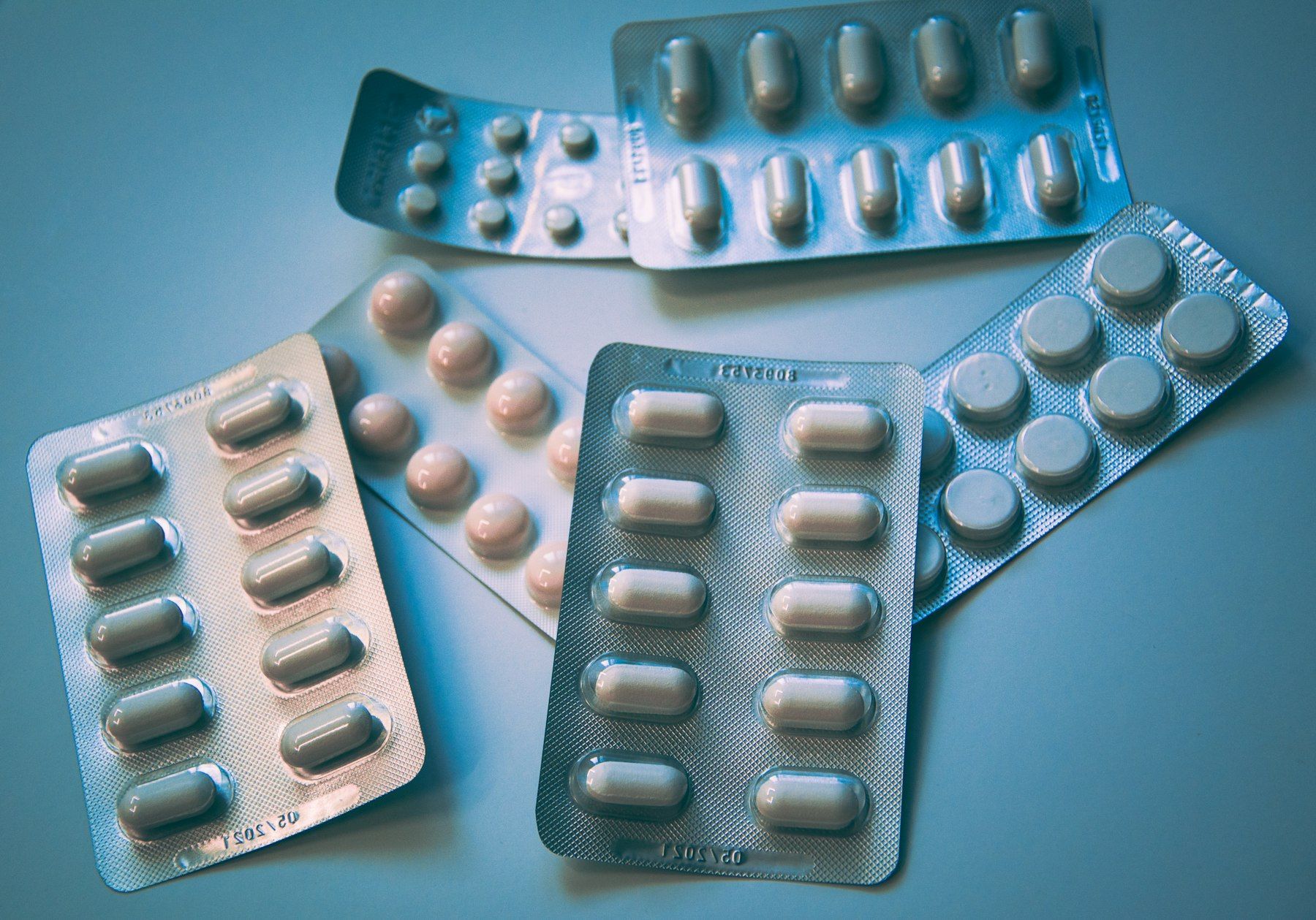
TL;DR: The 8 B-vitamins work as a team — but not everyone needs the same amount of each. B12 (serum above 400 pg/ml, holo-TC above 50 pmol/l), folate (above 5 ng/ml) and homocysteine (below 10 µmol/l) are the three key lab values. Vegans, metformin and PPI users, and adults over 60 almost always need B12. Methylated forms (methylcobalamin, 5-MTHF) pay off with MTHFR mutations or elevated homocysteine. Keep B6 below 25 mg long-term — above 100 mg risks nerve damage.
This article does not replace medical advice. With numbness, neuropathy or suspected pernicious anemia, always see a doctor.
Why B-Vitamins Are Not a Uniform Group
Eight B-vitamins, eight different jobs. The umbrella term “vitamin B” dates back to a time when chemists suspected a single substance. Today we know: B1 does something completely different from B12. Taking all eight in one capsule sometimes hits the target — often it does not.
Three functional blocks help with the mental model:
Energy metabolism. B1 (thiamine), B2 (riboflavin), B3 (niacin), B5 (pantothenic acid) and B7 (biotin) are cofactors in the citric acid cycle and respiratory chain. Without them, cells cannot produce ATP. Deficiency shows as fatigue, performance drop and concentration problems.
Methylation and nerves. B6 (pyridoxine), B9 (folate) and B12 (cobalamin) form the methylation cycle. They recycle homocysteine into methionine, synthesize neurotransmitters and maintain the myelin sheath of nerves. Deficiency shows as neuropathy, depression and elevated homocysteine.
Cell division and blood. B9 and B12 are needed for DNA synthesis and therefore for red blood cell formation. Without them, erythrocytes grow too large — macrocytic anemia develops.
A concrete example: You have felt exhausted for three months, tingling in your feet, and your doctor reports serum B12 at 320 pg/ml. The gray zone. In Lab2go you track the trend, add holo-TC and MMA, and see whether the curve drops before neuropathy becomes chronic.
The 8 B-Vitamins at a Glance
This table is your reference sheet. Reference values and daily requirements apply to healthy adults.
| Vitamin | Main function | Daily requirement | Deficiency signs |
|---|---|---|---|
| B1 (thiamine) | Carbohydrate metabolism, nerves | 1.1 to 1.3 mg | Fatigue, beriberi, Wernicke |
| B2 (riboflavin) | Respiratory chain, skin, eyes | 1.1 to 1.4 mg | Cracked mouth corners, light sensitivity |
| B3 (niacin) | NAD/NADH, fat metabolism | 14 to 16 mg | Pellagra, dermatitis, dementia |
| B5 (pantothenic acid) | Coenzyme A, energy | 5 mg | Very rare: fatigue, paresthesia |
| B6 (pyridoxine) | Amino acids, neurotransmitters | 1.4 to 1.6 mg | Neuropathy, depression, anemia |
| B7 (biotin) | Fatty acid and amino acid metabolism | 30 to 45 µg | Hair loss, brittle nails, dermatitis |
| B9 (folate) | DNA synthesis, methylation | 300 to 400 µg | Macrocytic anemia, neural tube defects |
| B12 (cobalamin) | Methylation, myelin, blood formation | 4 µg | Neuropathy, anemia, depression |
For broader context, read the guide on understanding blood values.
The Key Lab Values: B12, Folate, Homocysteine, MMA
Four lab values cover the entire B-vitamin status reliably. The rest is specialty diagnostics.
Serum B12. The standard value, but with pitfalls. Below 200 pg/ml is clear deficiency, 200 to 400 pg/ml is a gray zone. Many labs list 190 pg/ml as the lower limit — too low for biohackers who take neuropathy and cognitive performance seriously. Target: above 400 pg/ml.
Holo-transcobalamin (holo-TC). The active, cell-available fraction of B12. Values below 50 pmol/l confirm deficiency — even when serum B12 still looks fine. Holo-TC is the more sensitive marker and should be added whenever there is suspicion.
Methylmalonic acid (MMA). The functional marker. MMA rises when B12 is missing at the metabolic level. Values above 0.4 µmol/l (depending on lab) indicate intracellular B12 deficiency, even with normal serum B12. Especially useful in older adults, where serum B12 often misleads.
Serum folate. Below 3 ng/ml is deficiency, 3 to 5 ng/ml is low. Target: above 5 ng/ml. Red blood cell folate shows long-term status over 3 to 4 months and is the better marker when values fluctuate.
Homocysteine. The functional umbrella marker for B6, B9 and B12. Below 10 µmol/l is optimal, 10 to 15 µmol/l mildly elevated, above 15 µmol/l clearly elevated. Elevated homocysteine is an independent risk factor for cardiovascular disease and dementia.
A practical scenario: Your serum B12 is at 380 pg/ml, homocysteine at 13.5 µmol/l. B12 looks okay, but homocysteine signals functional deficiency. Add holo-TC — it often comes back below 50 pmol/l.
Methylated vs. Synthetic Forms
The debate around methylated B-vitamins is not just marketing, but not magic either. Three facts help the decision.
Methylcobalamin vs. cyanocobalamin. Methylcobalamin is the active form that cells use directly. Cyanocobalamin is converted in the liver and kidney — releasing a small amount of cyanide (harmless, but theoretically unfavorable for smokers and kidney patients). In healthy people with working methylation, both forms do the same job. With MTHFR mutations, neuropathy or elevated homocysteine, methylcobalamin is clearly the better choice.
5-MTHF vs. folic acid. Synthetic folic acid is converted into 5-MTHF via the MTHFR enzyme. Around 40 percent of people carry an MTHFR mutation (C677T or A1298C) that slows this conversion by 30 to 70 percent. In this group, “unmetabolized folic acid” accumulates in the blood — the clinical relevance is debated, but studies link it to altered immune function. 5-MTHF bypasses the conversion and works immediately.
P5P vs. pyridoxine. Pyridoxal-5-phosphate (P5P) is the active form of B6. It costs more but matters for liver issues or poor conversion. For most people, pyridoxine works fine — what matters is the dose, not the form.
Rule of thumb: If your homocysteine is below 8 µmol/l, you have no known MTHFR mutation and you feel fine, standard forms work. If you have symptoms or a genetic variant, paying extra for methylated forms is worth it.
Risk Groups: Who Almost Always Needs to Supplement
Four groups need B-vitamins beyond food. If you belong to one of them, tracking is non-negotiable.
Vegans and strict vegetarians. B12 occurs almost exclusively in animal products. Plant sources like algae or sauerkraut deliver B12 analogs that the body does not reliably use. 250 µg of methylcobalamin daily or 2000 µg weekly is the standard. After 6 months without supplementation, serum B12 drops measurably — after 2 to 3 years, clinical deficiency follows.
Adults over 60. Stomach acid production declines with age. Without enough acid, B12 is not released from food. Around 20 percent of adults over 60 have subclinical B12 deficiency, often with normal serum B12. Holo-TC and MMA are the better markers here.
Metformin users. Metformin reduces B12 absorption by up to 30 percent. After 4 to 5 years of metformin, 10 to 30 percent of users show deficiency. Prophylactic dose: 500 to 1000 µg of methylcobalamin daily and an annual B12 check.
PPI users (pantoprazole, omeprazole). Proton pump inhibitors block stomach acid and reduce B12 absorption from food. Anyone on PPIs for more than 2 years should test B12 every 6 months.
Heavy drinkers and chronically stressed people. Alcohol reduces folate absorption and blocks B1. Chronic stress increases B-vitamin turnover through cortisol and neurotransmitter synthesis. A basic low-dose B-complex is sensible here.
For a systematic start into supplementation, read the supplement beginners guide.
Dosing: What Actually Works
Official daily intakes (DGE, EFSA) prevent clinical deficiency — they do not optimize. These doses have proven themselves in practice.
B12 for deficiency. 1000 µg of oral methylcobalamin daily for 4 to 8 weeks, then 250 to 500 µg maintenance. Only 1 to 3 percent is absorbed orally via passive diffusion — hence the high doses. With pernicious anemia or malabsorption: 1000 µg intramuscular weekly for 4 to 8 weeks, then monthly.
Folate/5-MTHF. Standard 400 µg of 5-MTHF daily. With elevated homocysteine or pregnancy planning, 800 µg. Do not exceed 1000 µg without a B12 check — high folate doses can mask a B12 deficiency.
B6. 5 to 25 mg of P5P or pyridoxine daily is enough. Chronic doses above 100 mg risk nerve damage — the EFSA upper limit is 12 mg per day. Always check the B6 content of B-complex products: many contain 50 to 100 mg, which is problematic long-term.
B-complex as a base. A low-dose complex with 10 to 25 mg B6, 400 µg 5-MTHF, 250 to 500 µg methylcobalamin and moderate amounts of other B-vitamins is the best choice for most people. High-dose “stress B-complexes” with 50 to 100 mg of each vitamin are unnecessary and risky for B6.
Niacin (B3) as a cholesterol supplement. Only under medical supervision. Above 500 mg per day, liver risk rises. For lipid optimization, see safer alternatives in cholesterol values explained.
B6 Toxicity: The Underestimated Side Effect
Vitamin B6 is the only B-vitamin with real toxicity risk. Chronic doses above 100 mg per day can trigger sensory neuropathy — numbness, tingling, unsteady gait, sometimes irreversible.
The problem: many “energy” and “stress B-complexes” contain 50 to 100 mg of B6 per daily dose. Anyone also taking energy drinks, fortified cereals and B6-containing multivitamins quickly exceeds 150 mg per day. Symptoms develop insidiously over months.
The numbers:
- Safe chronic dose (EFSA): 12 mg per day
- NIH upper limit: 100 mg per day
- Above 200 mg per day for months: neuropathy risk rises sharply
- Above 500 mg per day: neuropathy almost certain
Practical approach: Keep total B6 intake below 25 mg per day. If your B-complex exceeds that, cycle off for 2 to 4 weeks every few months. With tingling or numbness, stop immediately and consult a doctor.
A concrete example: For 8 months you have taken a B-complex with 75 mg of B6 plus a multivitamin with 20 mg. That is 95 mg per day — at the edge. For 4 weeks your soles have been tingling. That is not coincidence. Stop and reassess after 4 to 8 weeks. For baseline coverage, a complex with 5 to 15 mg of B6 is enough.
Reading Deficiency Signs Correctly
B-vitamin deficiencies often show up nonspecifically. These patterns help with attribution.
Fatigue and performance drop. Classic for B12, folate and B1 deficiency. If macrocytic erythrocytes (MCV above 100 fl) also show up in the complete blood count, B12 or folate is the most likely cause.
Neuropathy. Tingling, numbness, unsteady gait — in B12 deficiency typically symmetrical in feet and hands. Clinical exam shows reduced vibration sense. Untreated, damage can become permanent.
Depression and cognitive decline. B12, folate and B6 are needed for serotonin, dopamine and GABA synthesis. With unexplained depression, a B-vitamin check is worthwhile. Homocysteine above 13 µmol/l in older adults measurably increases dementia risk.
Angular cheilitis and glossitis. Cracked mouth corners and a red, smooth tongue are classic B2 and B12 signs. Often overlooked, but specific.
Hair loss and brittle nails. Only with true biotin deficiency. Clinically relevant biotin deficiencies are rare — the biotin supplement wave is mostly marketing. Exceptions: pregnant women, heavy drinkers, people with genetic variants.
Macrocytic anemia. MCV above 100 fl with low hemoglobin indicates megaloblastic anemia — almost always from B12 or folate deficiency. In the complete blood count, this is the decisive clue.
Tracking: How Often and What to Test
Standard panel (annual): Serum B12, folate, homocysteine. Out-of-pocket cost at a general practitioner: 25 to 40 euros.
Extended panel on suspicion: Plus holo-TC and MMA. 50 to 80 euros.
Full profile (with chronic symptoms): Plus pyridoxal-5-phosphate (active B6) and red blood cell folate. 120 to 180 euros.
Post-supplementation check: Retest 8 to 12 weeks after starting B12 or folate therapy. With values in target range, every 6 months, then annually.
Document context with every measurement: current supplements, medications (especially metformin, PPIs, contraceptives), alcohol intake and diet. For a systematic methodology, read the guide on long-term biomarker tracking.
B-Vitamins in Context: Combinations That Work
With vitamin D3+K2. Methylation is connected to vitamin D activation. If you optimize B-vitamins, do not forget D3. Details in the vitamin D3+K2 guide.
With magnesium. Magnesium is a cofactor for many B-vitamin-dependent enzymes, especially in energy metabolism. Magnesium deficiency can blunt B-vitamin effects. For form selection see magnesium forms compared.
With omega-3. Omega-3 fatty acids and B-vitamins act synergistically for depression and cognitive function. Low homocysteine plus a high omega-3 index is the strongest combo for heart and brain.
Next Steps: Three Actions to Start
- Set your baseline. Get serum B12, folate and homocysteine tested. With gray-zone values, add holo-TC and MMA. Cost: 25 to 80 euros.
- Check your risk profile. Vegan, over 60, metformin or PPI? Then supplementation almost always makes sense. Start: 1000 µg methylcobalamin plus 400 µg 5-MTHF daily.
- Watch B6. Keep total intake below 25 mg per day. No high-dose stress B-complex without reason.
For the next step, check out the features of Lab2go or compare the plans and pricing.
This article does not replace medical advice. With numbness, neuropathy, significantly elevated homocysteine or suspected pernicious anemia, consult a doctor. Self-tracking complements medicine. It does not replace it.
Article FAQ
- Should I take a B-complex or individual B-vitamins?
- A low-dose B-complex makes sense for vegans, older adults and anyone with stress or high homocysteine. For a targeted B12 or folate deficiency, single supplementation is better: 1000 µg methylcobalamin for B12 deficiency, 400 to 800 µg 5-MTHF for elevated homocysteine. A complex delivers all eight at once, but often with too much B6 (>25 mg) and too little actual B12.
- Is methylcobalamin better than cyanocobalamin?
- Methylcobalamin is the active form that cells use directly. Cyanocobalamin is converted in the liver and kidneys, which is inefficient with MTHFR mutations or weak methylation. Methylcobalamin costs more but is the better choice for neuropathy, fatigue and genetic variants. With a healthy liver and no mutation, cyanocobalamin does the same job.
- When is B12 considered deficient?
- Serum B12 below 200 pg/ml is clear deficiency, 200 to 400 pg/ml is a gray zone. Holo-transcobalamin (holo-TC) is more reliable: values below 50 pmol/l confirm deficiency. Additional confirmation comes from methylmalonic acid (MMA): values above 0.4 µmol/l indicate functional B12 deficiency even when serum B12 still looks normal. Homocysteine above 15 µmol/l strengthens the suspicion.
- How much B12 should I supplement?
- For confirmed deficiency, 1000 µg of oral methylcobalamin per day usually works because only 1 to 3 percent is absorbed via passive diffusion. Sublingual lozenges increase bioavailability only marginally. With severe malabsorption (pernicious anemia, gastric bypass), intramuscular injections of 1000 µg weekly for 4 to 8 weeks, then monthly, are needed.
- Why is high-dose vitamin B6 dangerous?
- Chronic doses above 100 mg of vitamin B6 (pyridoxine) per day can cause sensory neuropathy — numbness, tingling, unsteady gait. Risk typically accumulates from B-complex products with 50 to 100 mg B6 combined with energy drinks and other sources. EFSA recommends a maximum of 12 mg per day as a safe chronic dose. If you use supplements, check total B6 and stay below 25 mg.
- Which medications cause B-vitamin deficiency?
- Metformin reduces B12 absorption by up to 30 percent — anyone on metformin should test B12 annually and supplement 1000 µg methylcobalamin if below 400 pg/ml. Proton pump inhibitors (pantoprazole, omeprazole) block stomach acid needed to release B12 from food. Oral contraceptives lower folate and B6. Levodopa, isoniazid and some antiepileptics also affect B-vitamin status.
- What is 5-MTHF and when is it needed?
- 5-MTHF (methylfolate) is the active form of folate that the body uses directly. People with MTHFR mutations (C677T, A1298C — around 40 percent of the population) convert synthetic folic acid into 5-MTHF only partially. With homocysteine above 10 µmol/l, pregnancy planning or known MTHFR variants, 400 to 800 µg of 5-MTHF per day is the gold standard. Healthy people without mutation do fine on folic acid.
- Do vegans need to supplement B-vitamins?
- B12 is non-negotiable for vegans — it appears almost exclusively in animal products. 250 µg of methylcobalamin daily or 2000 µg weekly is standard. Other B-vitamins are usually covered through legumes, whole grains and nutritional yeast. Active or stressed vegans benefit from an additional low-dose B-complex with 400 µg 5-MTHF.
- How often should I test B-vitamin levels?
- Healthy adults: test B12 and folate once a year as part of the basic panel. Vegans, metformin and PPI users, and adults over 60: every 6 months. On active supplementation, recheck after 3 months to confirm values are stable in target range. Homocysteine works as a functional methylation marker — once a year is enough.
- What does a B-vitamin panel cost?
- A basic panel with B12 and folate costs 25 to 40 euros as an out-of-pocket test at a general practitioner. Holo-TC plus MMA as functional B12 diagnostics runs 50 to 80 euros. Online labs offer extended B-vitamin profiles including homocysteine and pyridoxal-5-phosphate (active B6) for 90 to 150 euros. Statutory health insurance covers the cost when there is a medical indication.
This article is for general information only and is not a substitute for individual medical advice, diagnosis, or treatment. Discuss any changes to your diet, supplementation, or medication with a qualified healthcare professional.

Maritta Schmid, Founder lab2go, Biohacker
Founder & Biohacker
Berlin, Germany
Connects health data, technology, and practical routines for real behavioral change.
Areas of focus
Discussion
Community comments coming soon. Until then, we welcome feedback and questions via email.
E-Mail anzeigen